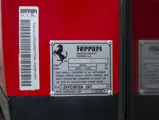













Chassis No.
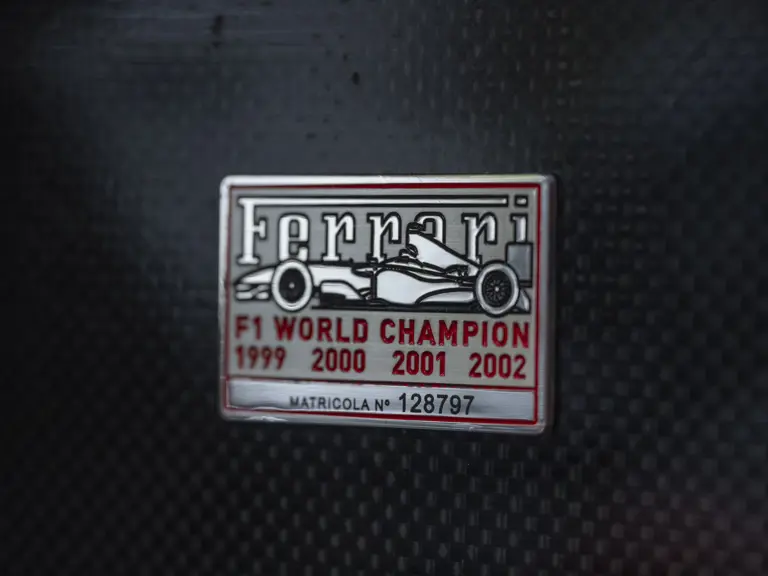
ZFFCW56A730128797
{{lr.item.text}}
{{bidding.lot.reserveStatusFormatted}}
THE ULTIMATE HYPERCAR FOR A NEW MILLENIUM
If one manufacturer can claim to have created the definitive mold for an evolution of modern hypercars, it must be Ferrari. From the competition-bred 288 GTO and F40 of the late 1980s, through the voluptuous F50 of the 1990s, Ferrari combined unparalleled performance and breathtaking designs to build small batches of impeccable road machines for ultra-exclusive clientele. These were undeniably some of the most formidable production sports cars ever built, and they remain so to this day.
After F50 production concluded in 1998, tifosi dreamt of what exotic top-shelf speed machine Maranello might devise next—and what form it would take. Speculation was rampant over whether the eventual F50 successor would employ a rear-mounted V-8 or V-12, and if the packaging would be spartan and purposeful like the F40, or luxurious and evocative of vintage designs like the F50.
In mid-2002, Ferrari president Luca di Montezemolo revealed the answer with the introduction of the forthcoming Ferrari Enzo. Though the model’s name required no explanation, he reasoned that after Ferrari had named cars for historically important locales like Maranello and Modena, the time had finally come to honor the company’s founder. He also clarified that the new model would have a strong connection to Formula 1 racing, as the manufacturer had just won the 1999 and 2000 Manufacturers’ Championship, and the 2000 Drivers’ Championship. Michael Schumacher was, in fact, just getting started on his historic dominance of Formula 1, a still unequaled feat of five consecutive championships.
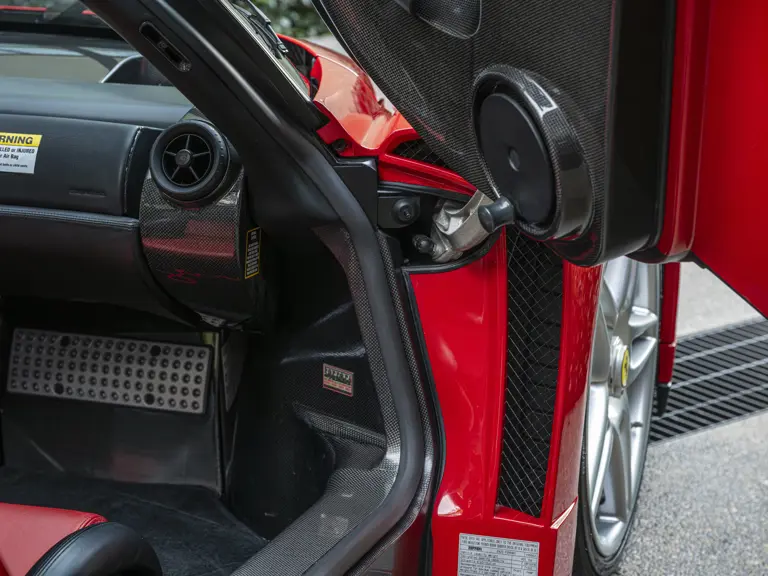
Formally debuting at the 2002 Paris Motor Show, the Ferrari Enzo certainly delivered on the premise of its design brief. Like a Formula 1 car, the Enzo featured futuristic materials to achieve maximum weight savings, with a foundational chassis tub made of carbon fiber and Nomex honeycomb weighing just 200 pounds. Aluminum sub-frames were then mounted on the tub, and these laid the groundwork for the attachment of Pininfarina-designed bodywork.
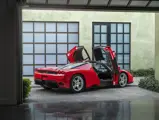
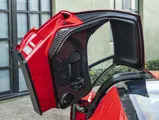
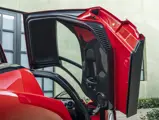
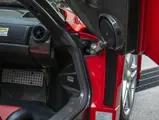
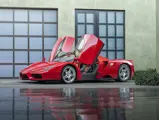
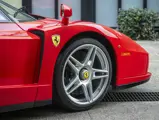
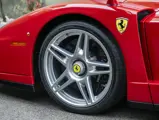
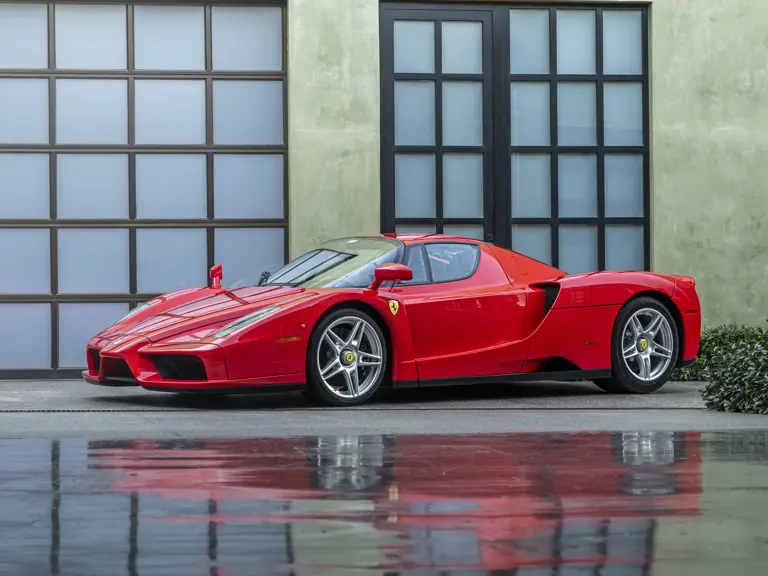
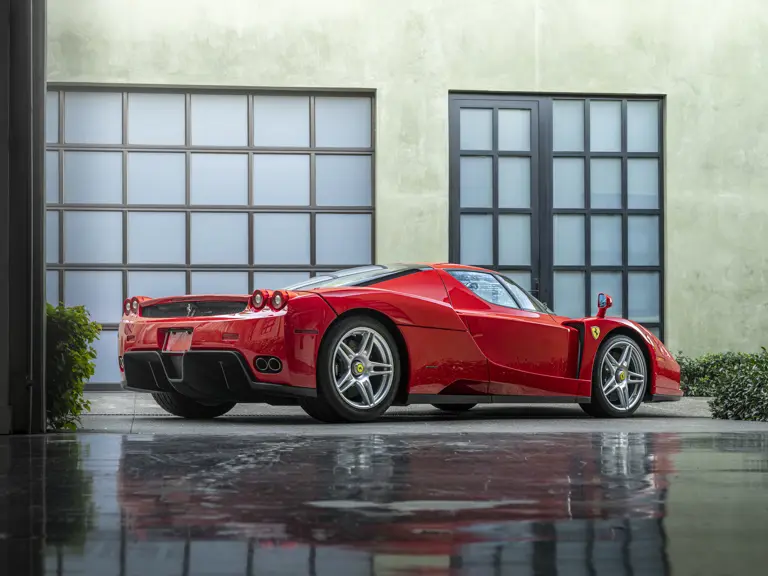
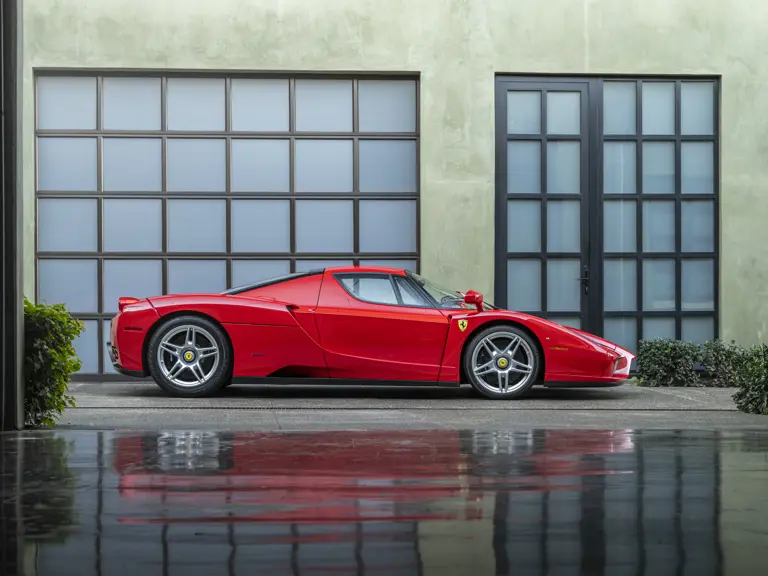
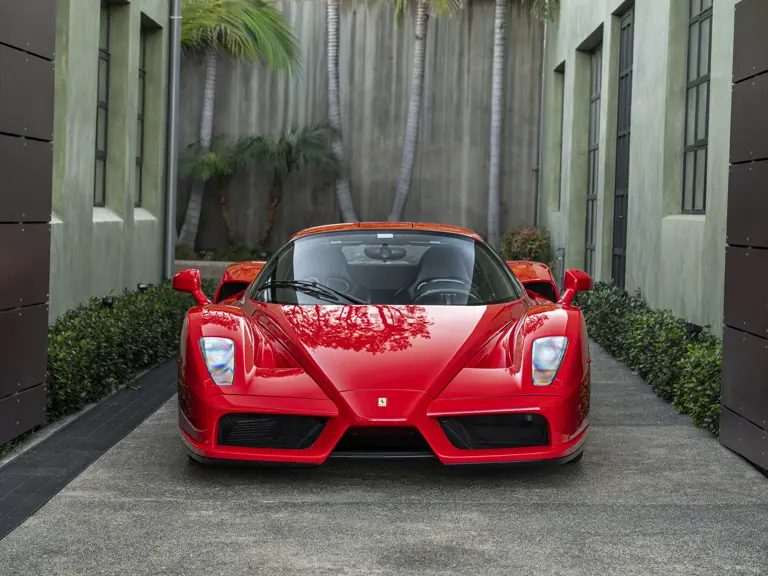
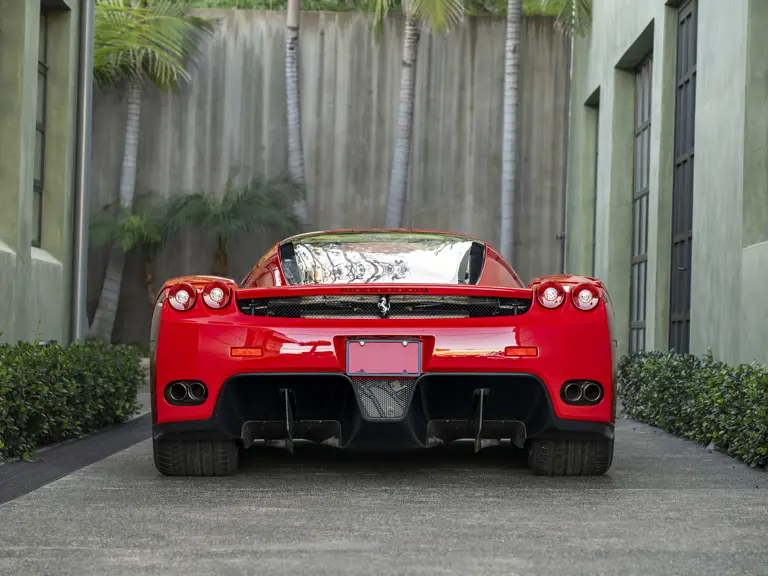
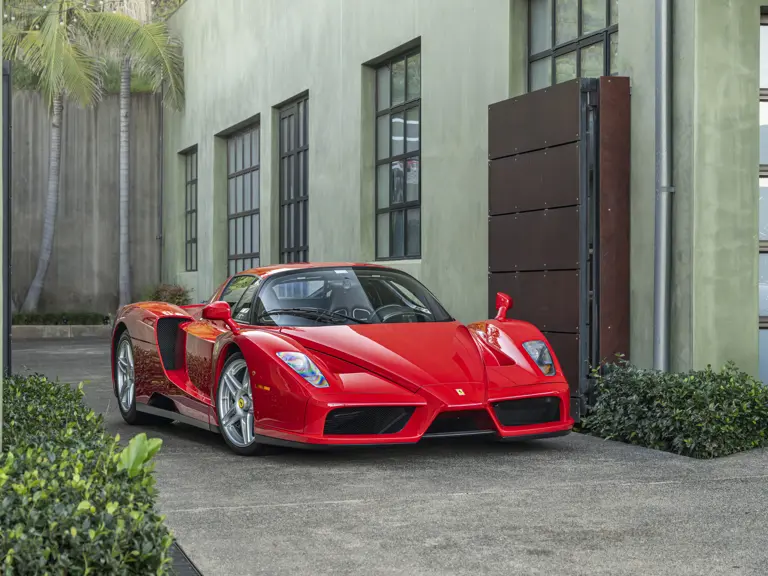
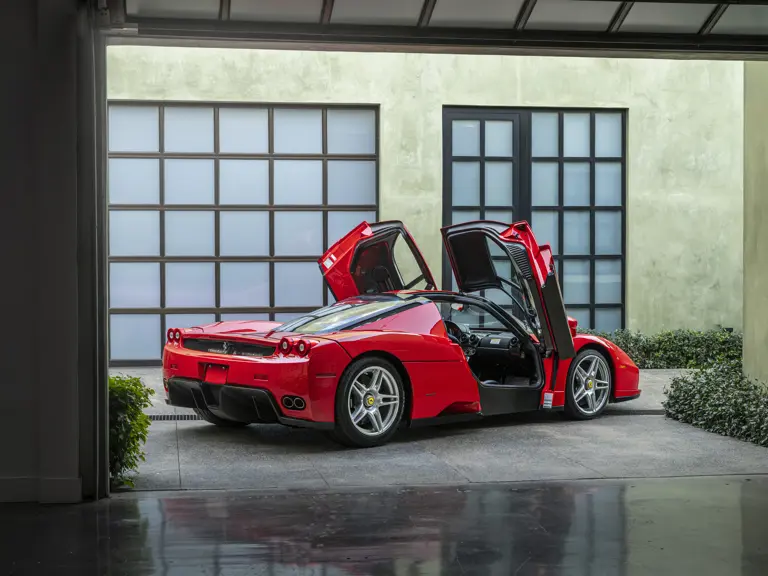
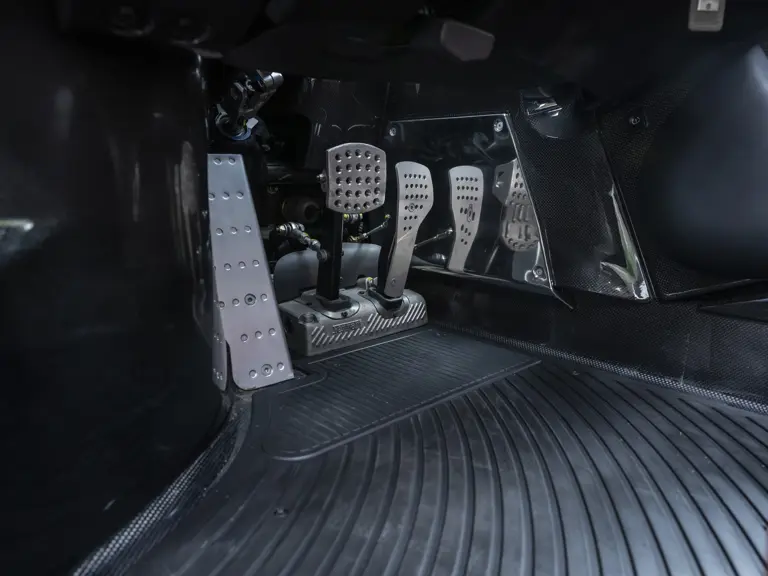
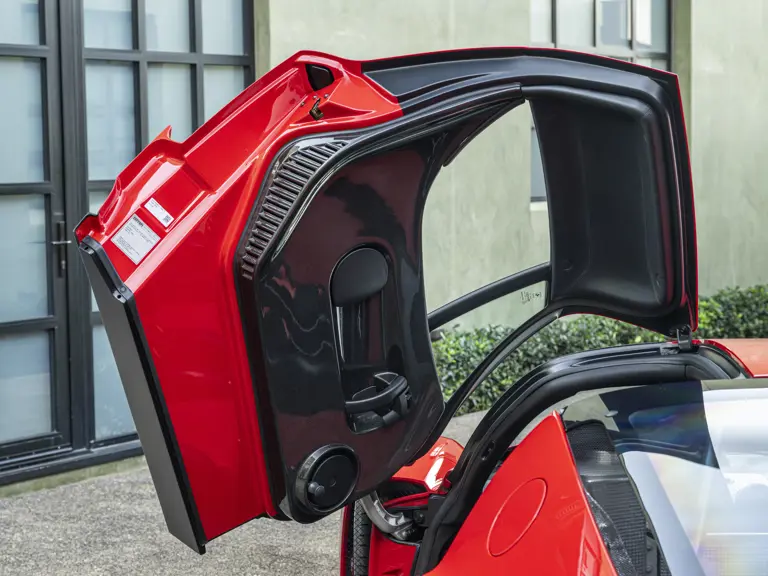
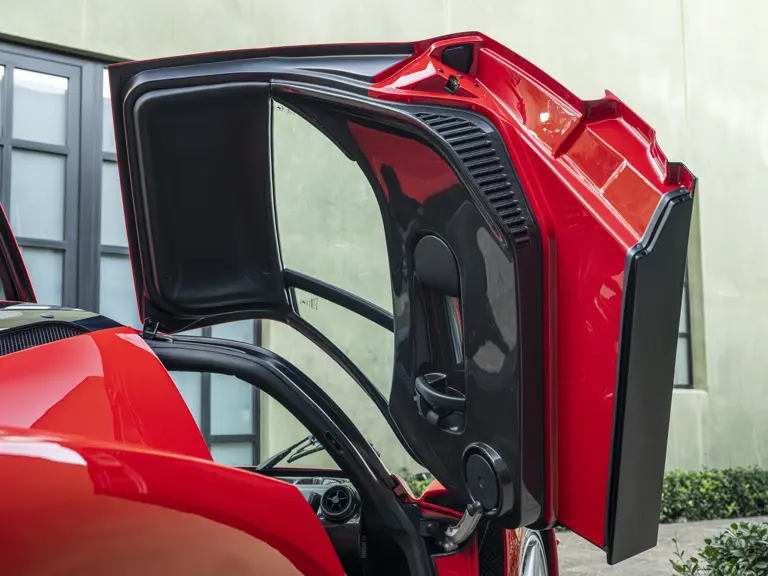
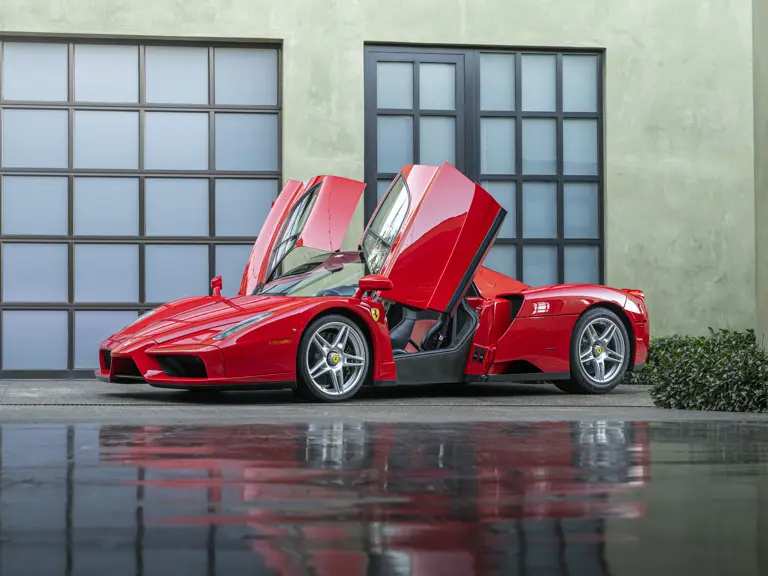
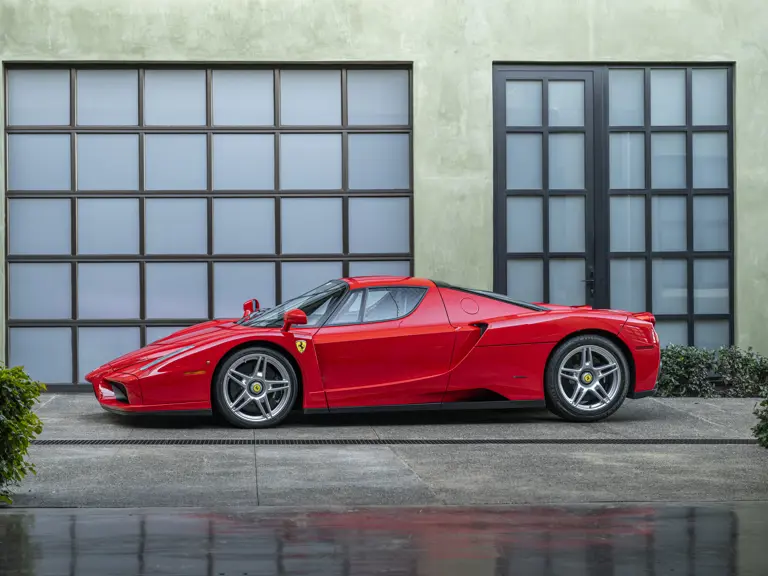
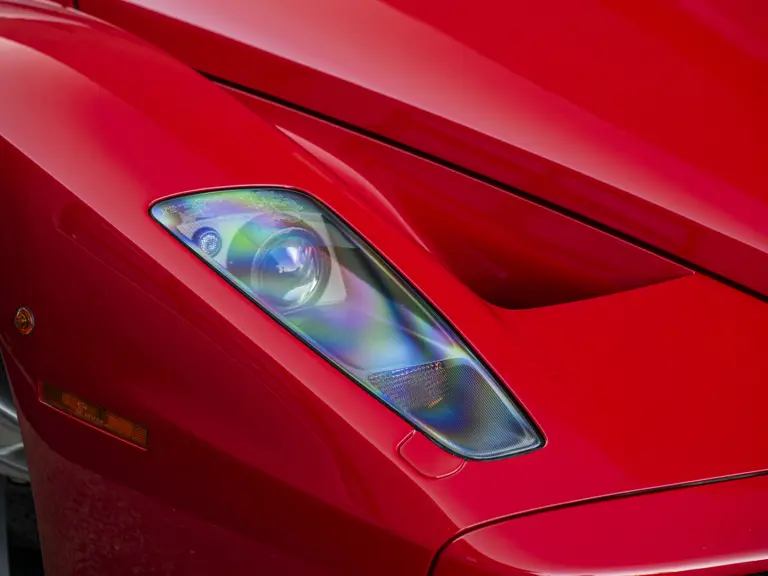
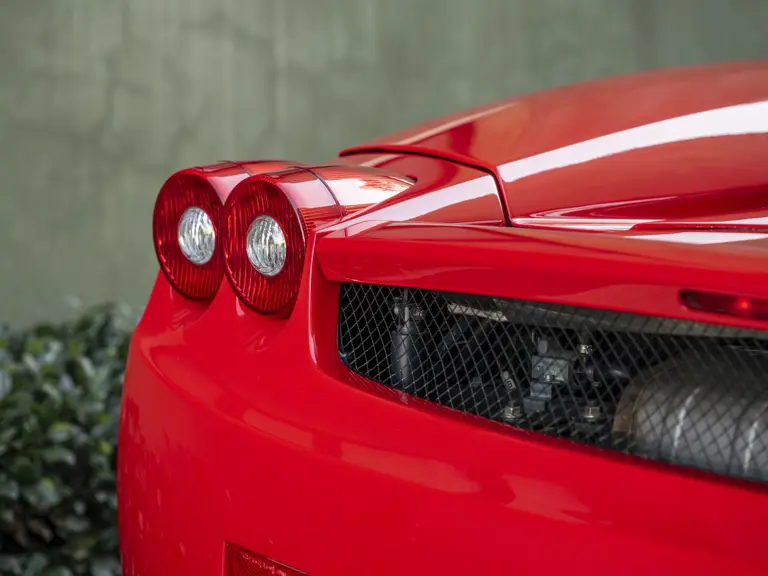
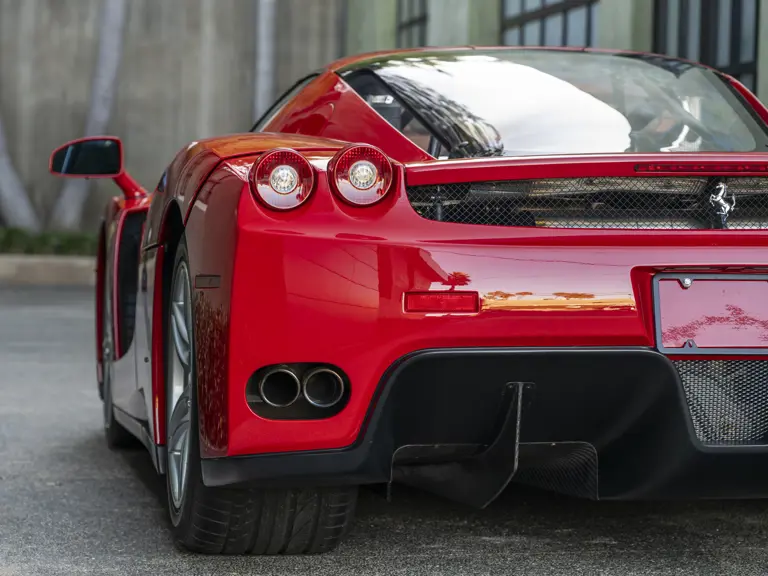
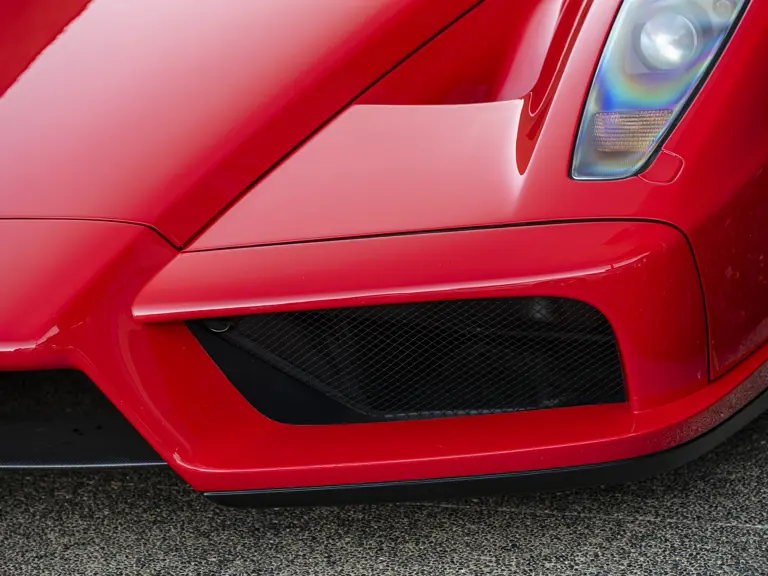
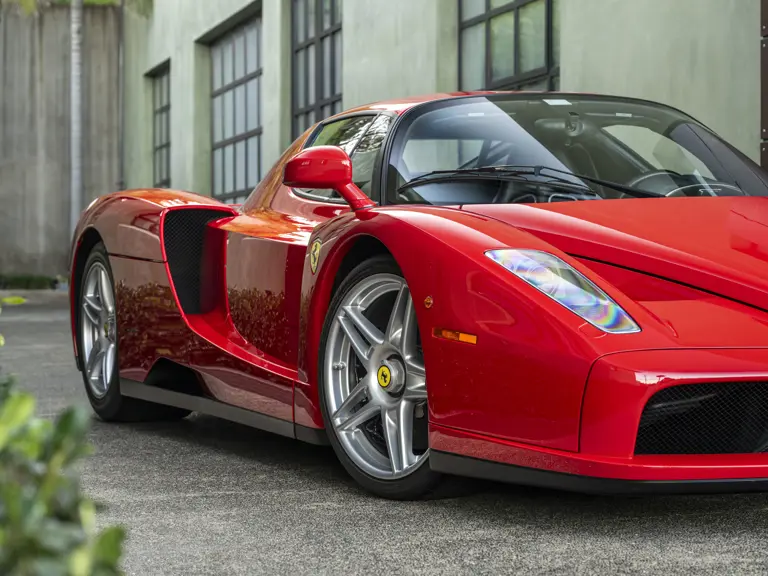
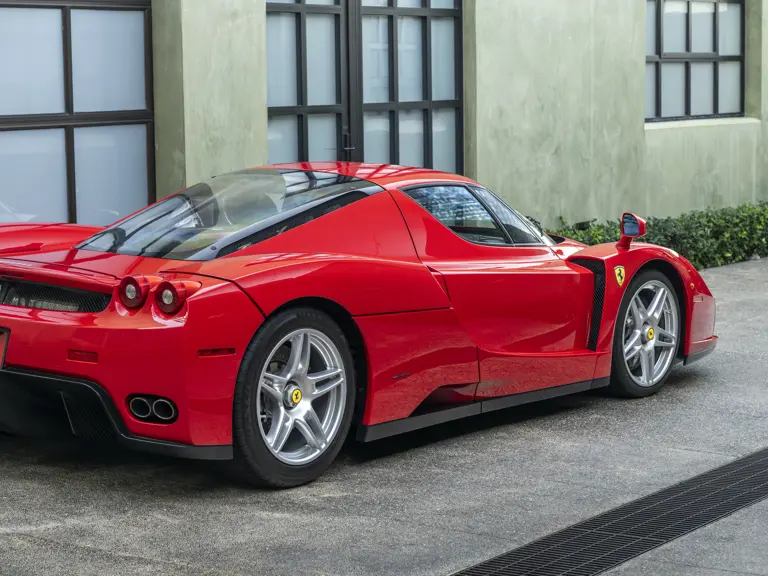
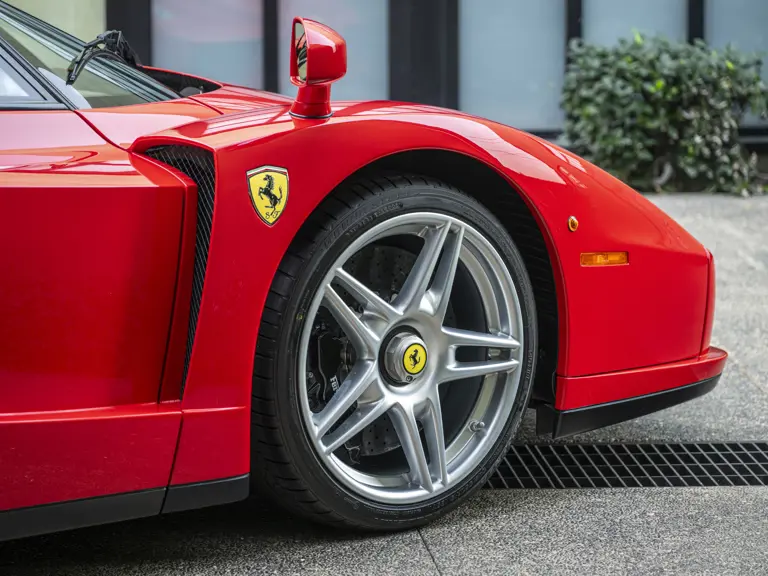
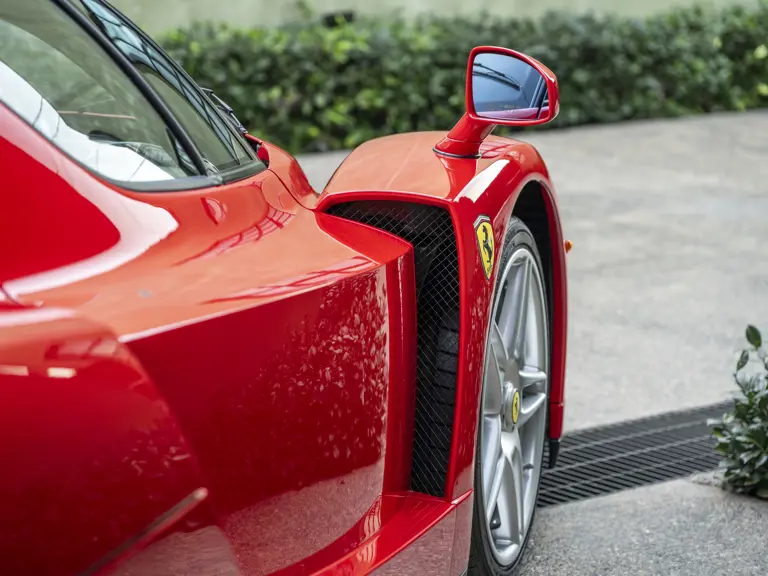
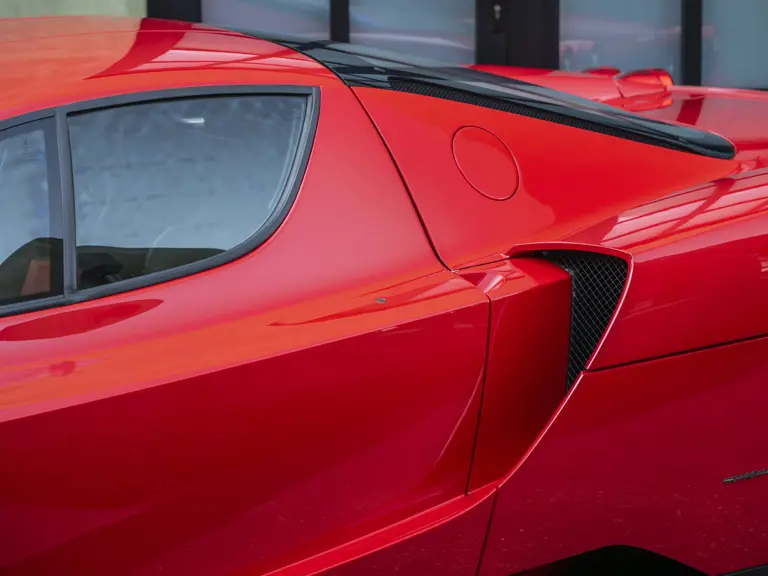
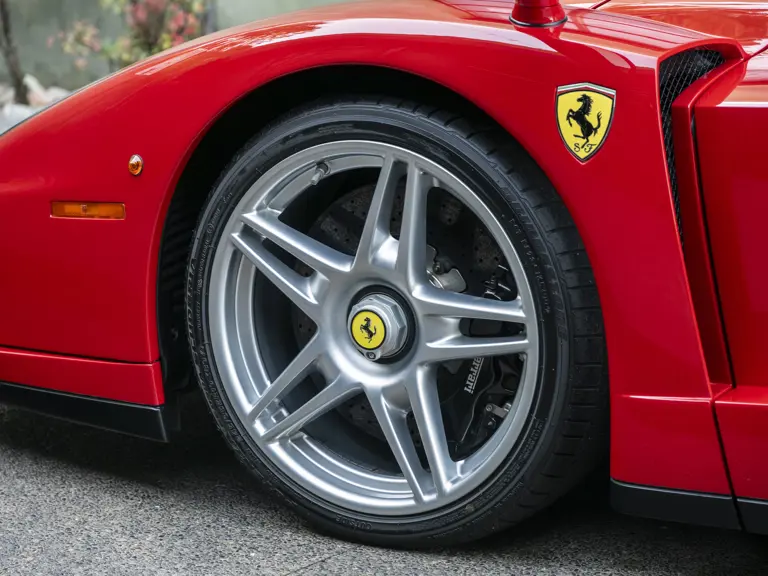
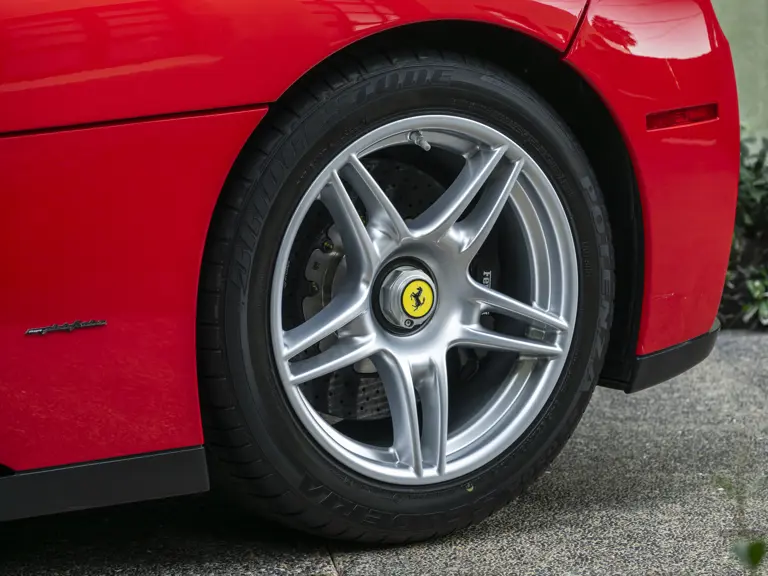
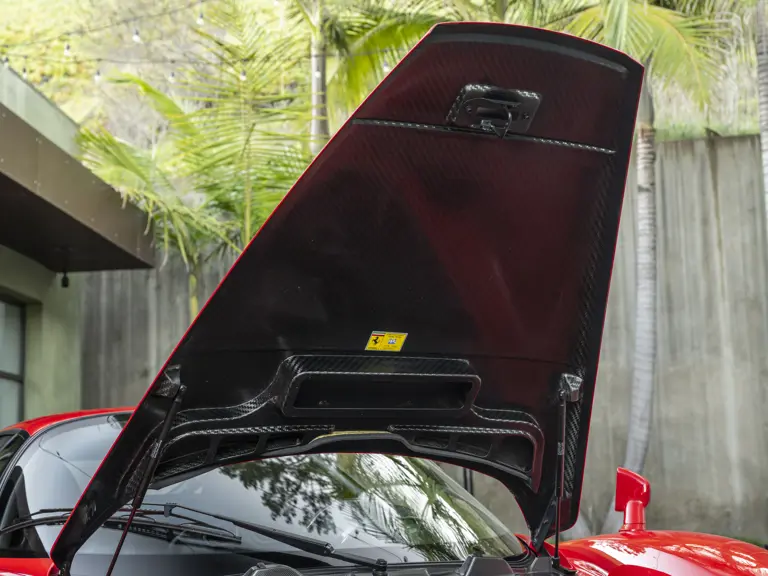
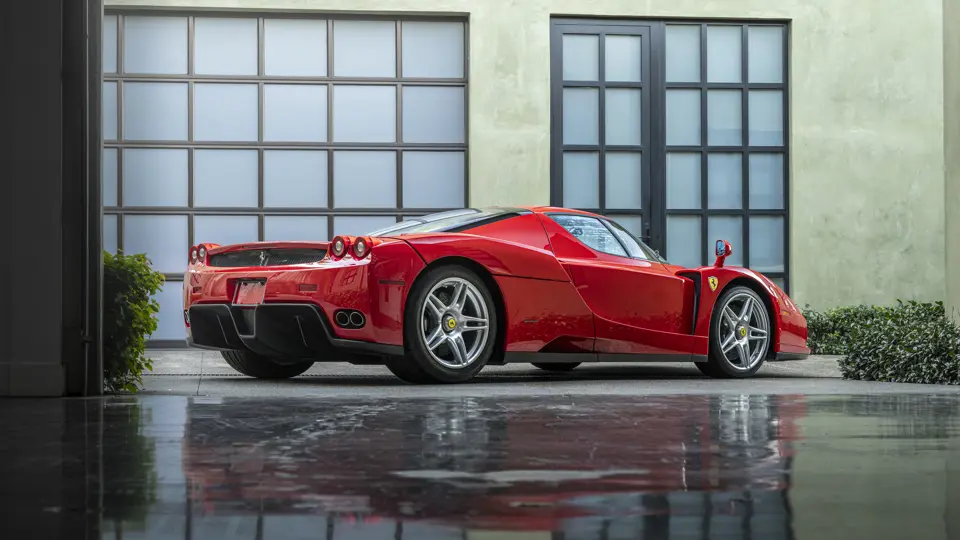
Penned by designer Ken Okuyama, the Enzo’s external styling mimicked the shape of an open-wheel racecar, though as if wrapped in a skin extending over the fenders and cockpit. Aerodynamically perfected in Pininfarina’s wind tunnel, the body was comprised of panels woven from carbon fiber and Kevlar. Nineteen-inch alloy wheels anchored by 15-inch Brembo carbon-ceramic disc brakes, and unique, upward-swinging dihedral doors completed the Enzo’s chassis and cabin, finishing a car that was highly technological and endlessly fascinating.
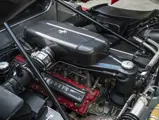
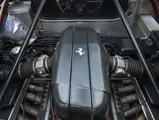
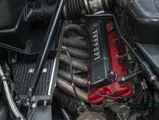
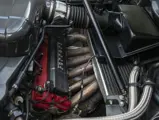
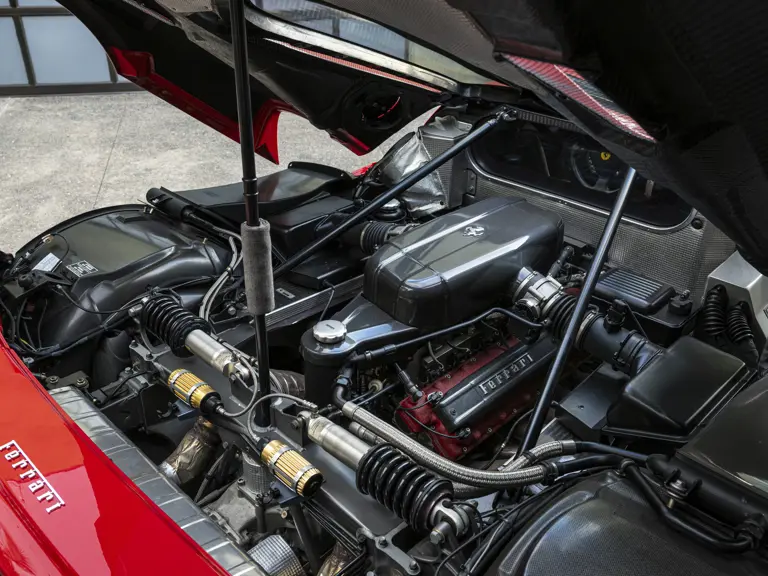
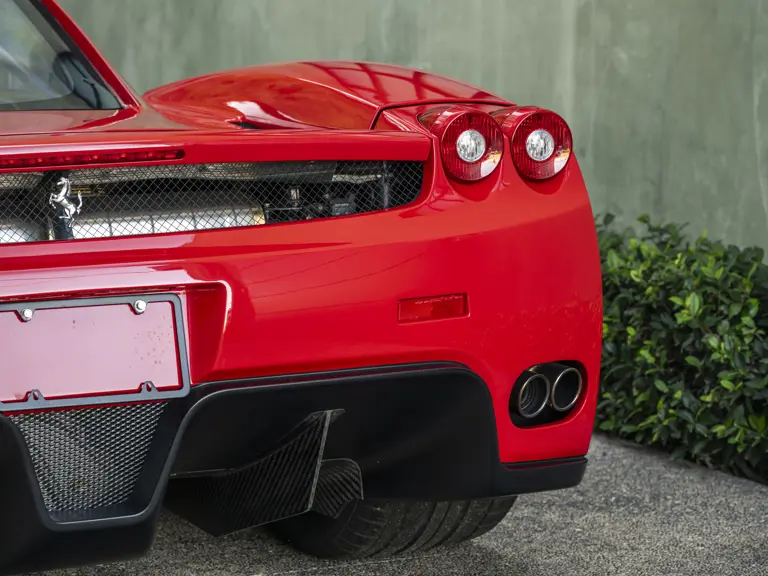
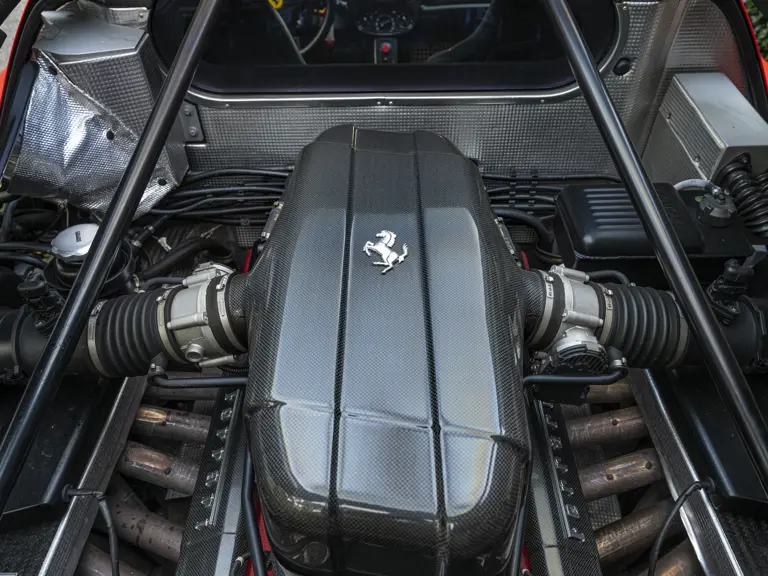
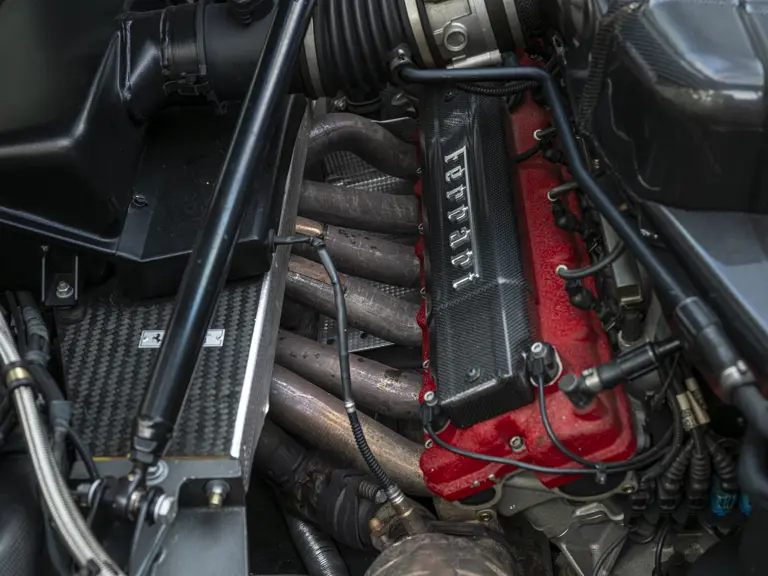
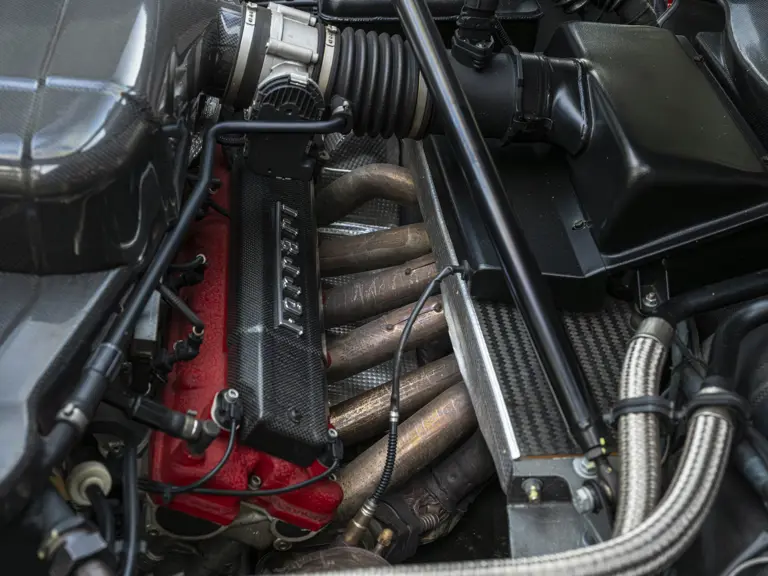
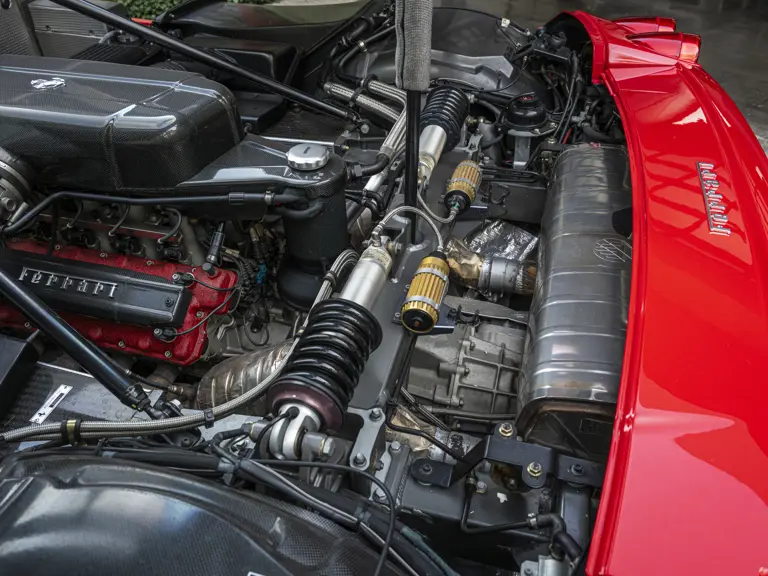
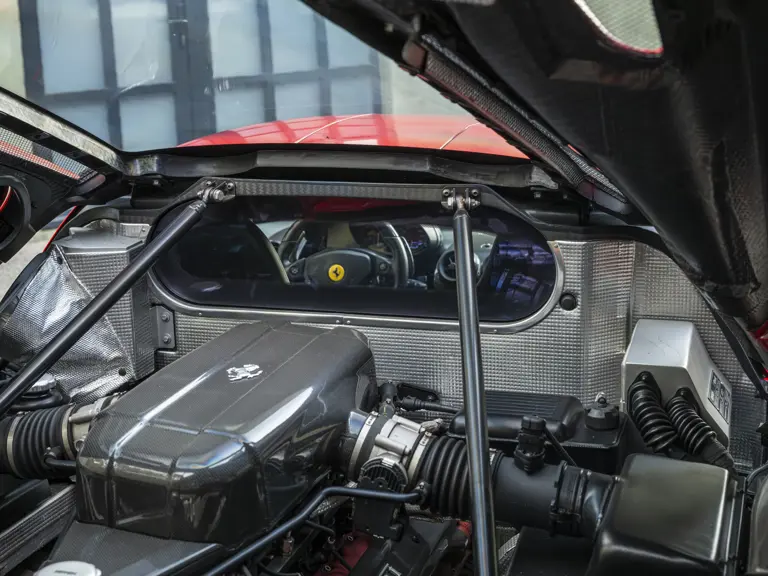
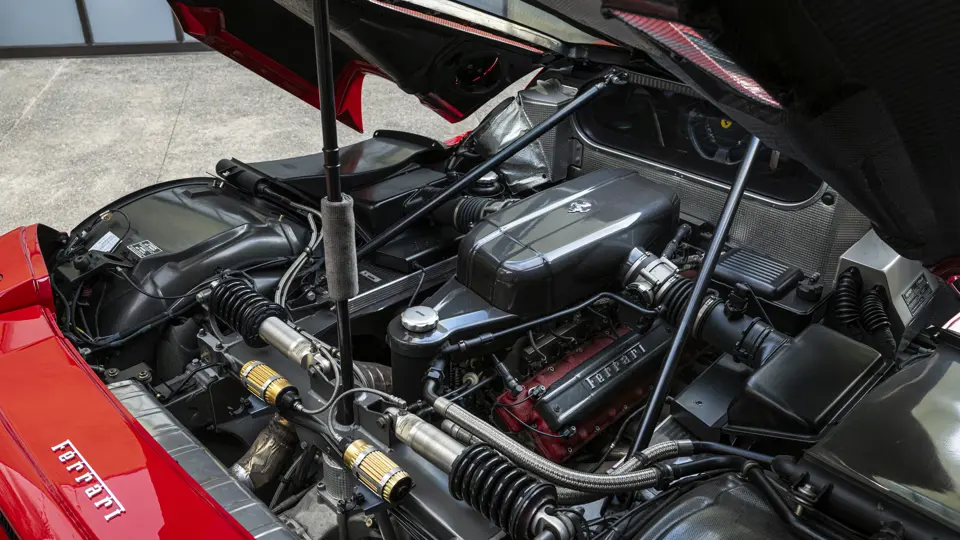
Into this phenomenal monocoque marriage of chassis and body, a new purpose-built engine continued the manufacturer’s long-running configuration for sports prototypes and hypercars with its location behind the driver. Ferrari essentially extended its concurrent 90-degree V-8 by two cylinders on each side and altered the angle, creating the 65-degree F140B V-12 engine. Displacing almost six liters, it was the largest engine Ferrari had built since the 712 Can-Am racecar of the 1970s. Packed with racing components such as Nikasil-lined cylinder walls, titanium connecting rods, and a telescoping intake manifold designed to boost torque, it developed 651 horsepower and 485 pounds-feet of torque—truly impressive even by today’s standards. Various evolutions of the F140 engine would go on to power the 599 series, the F12 Berlinetta, and LaFerrari.
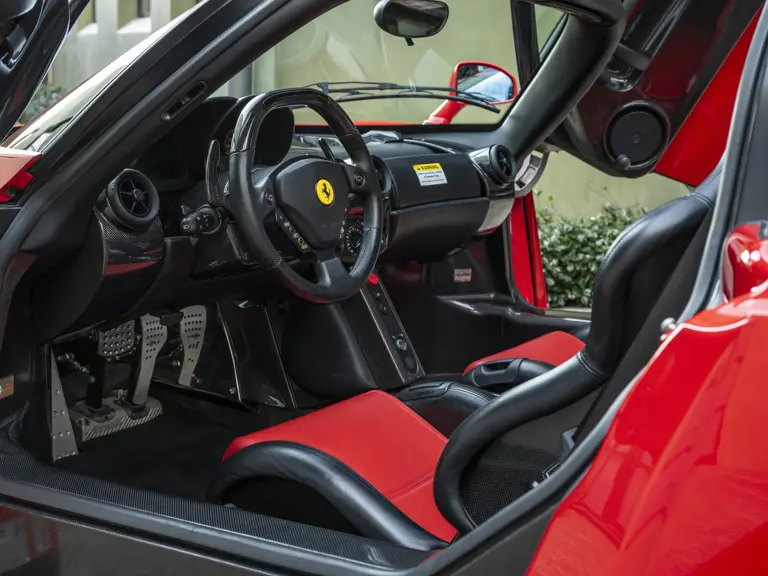
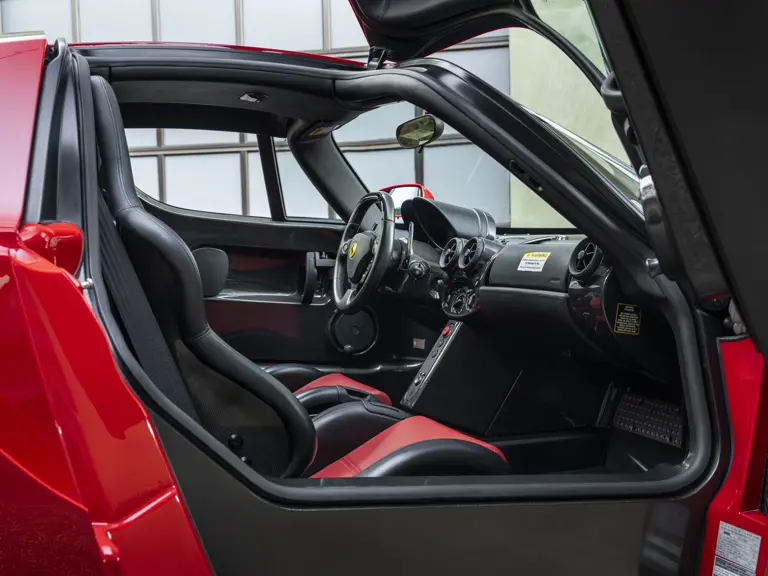
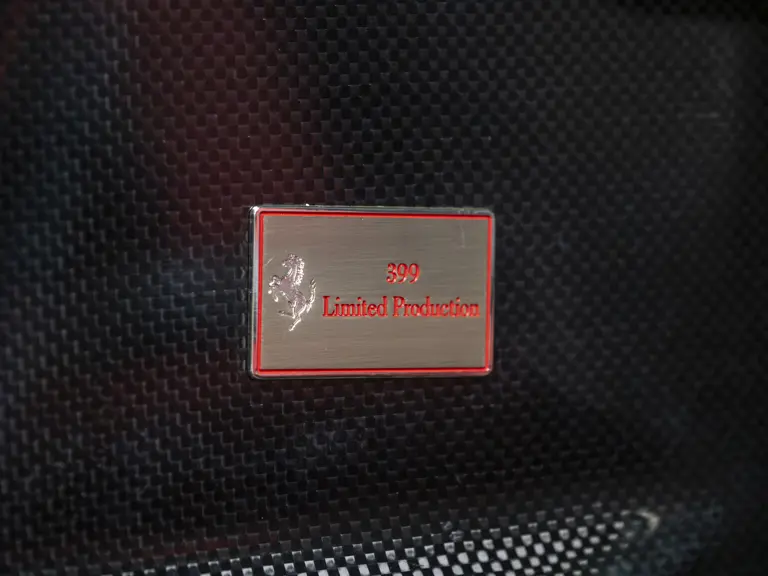
With power transmitted via a six-speed dual-clutch transaxle that was actuated with column-mounted paddle-shifters, the Enzo could reach 60 mph from a standstill in just 3.3 seconds and a top speed of 218 mph, setting a new standard for sports car performance. Production was initially proposed to be capped at 399 units until overwhelming customer demand eventually prompted Ferrari to build 498 cars, which was still sufficiently minimal to ensure the model’s rarity matched its exquisite engineering. As unique and captivating today as it was upon its 2002 introduction, the Ferrari Enzo continues to hold considerable sway with collectors and supercar enthusiasts. The seminal model was undeniably Maranello’s defining millennial hypercar, serving as the genetic link between the sensuous F50 and the hybrid-powered LaFerrari.
A SLEEPING DRAGON
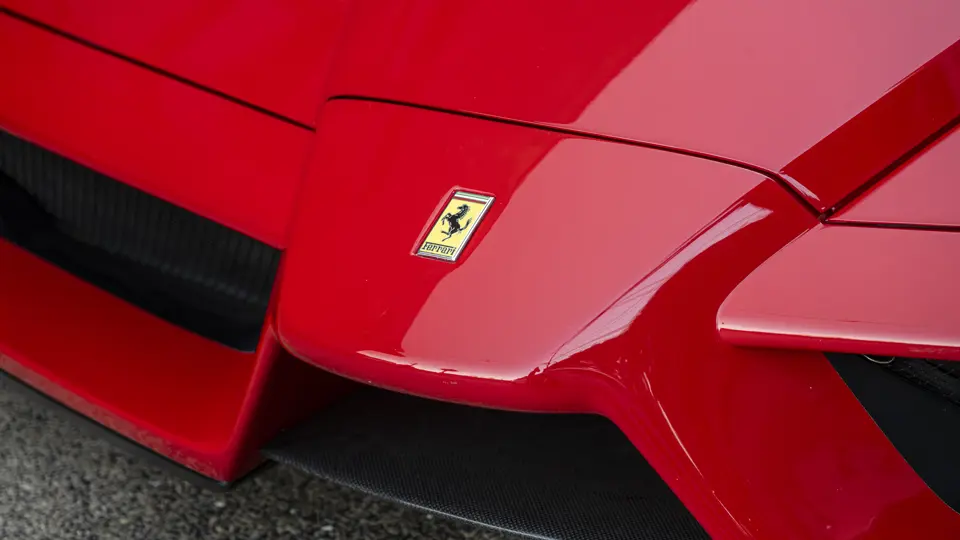
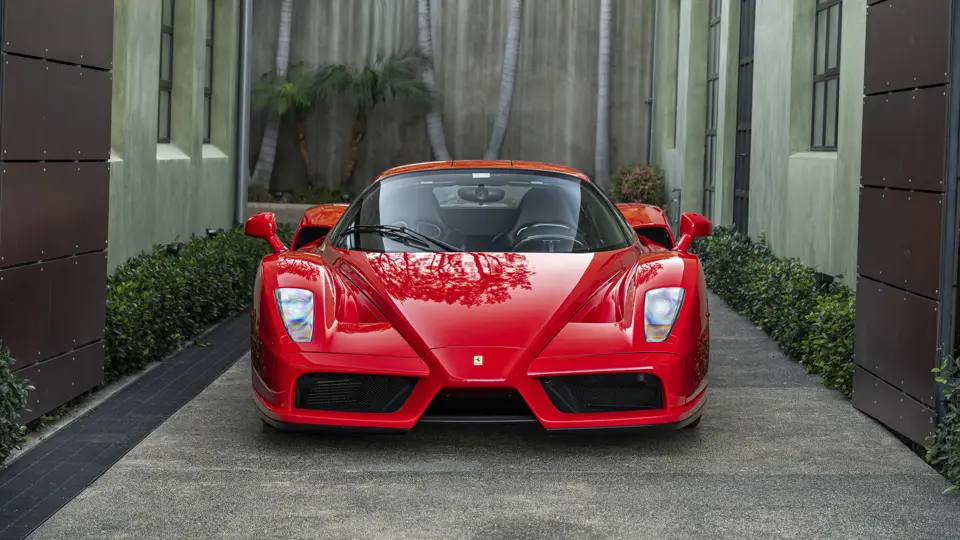
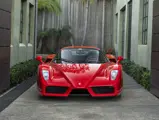
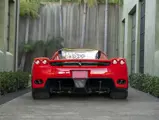
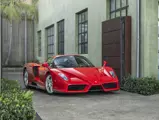
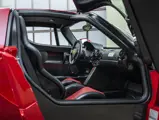
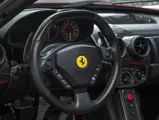
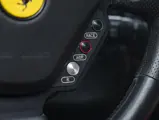
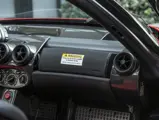
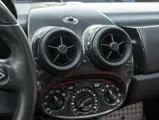
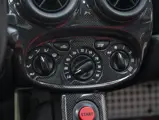
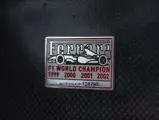
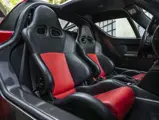
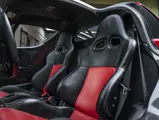
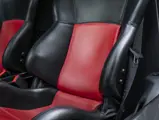
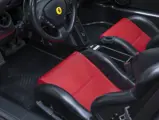
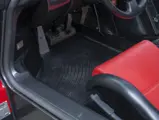
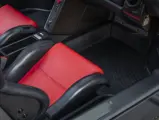
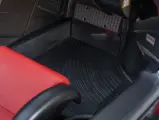
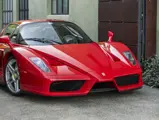
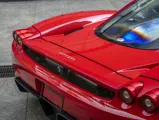
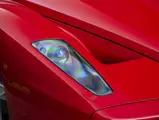
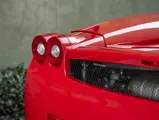
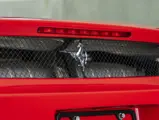
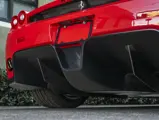
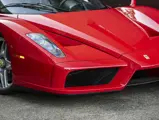
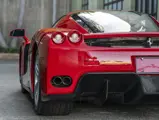
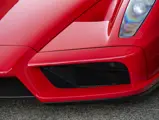
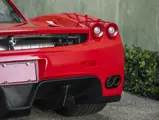
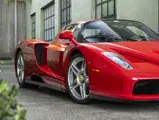
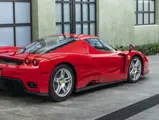
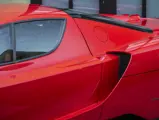
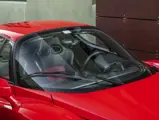
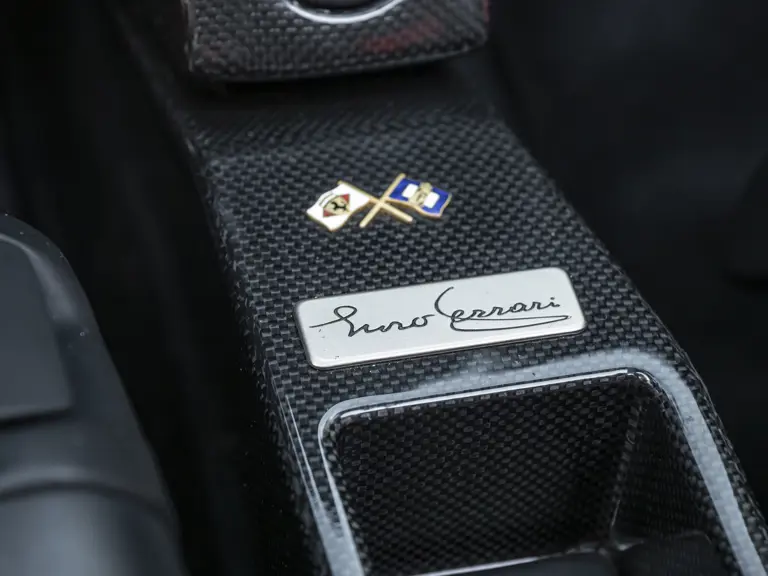
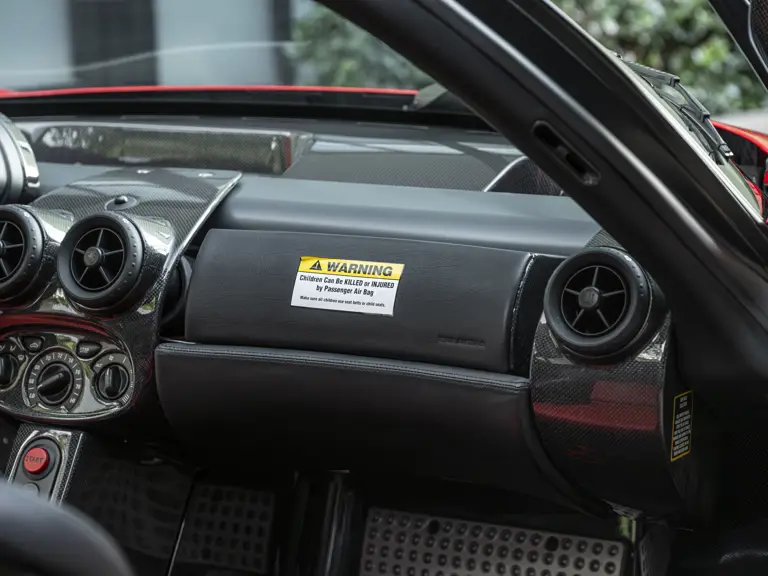
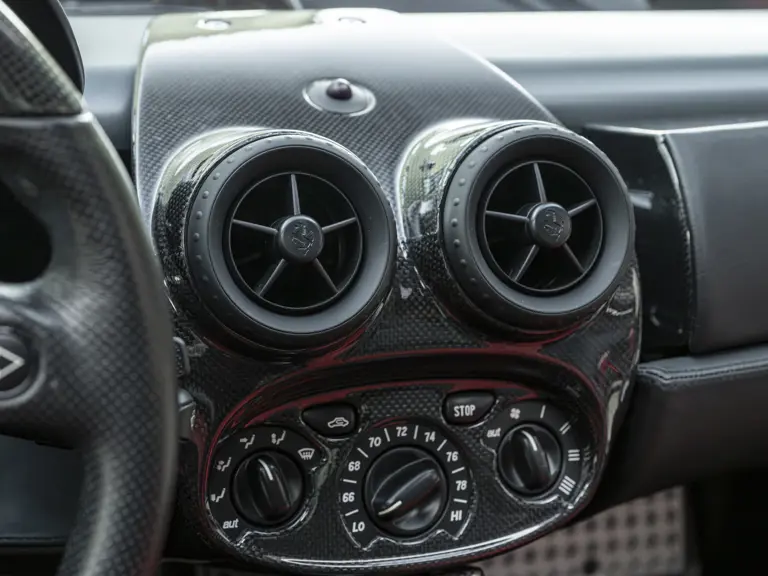
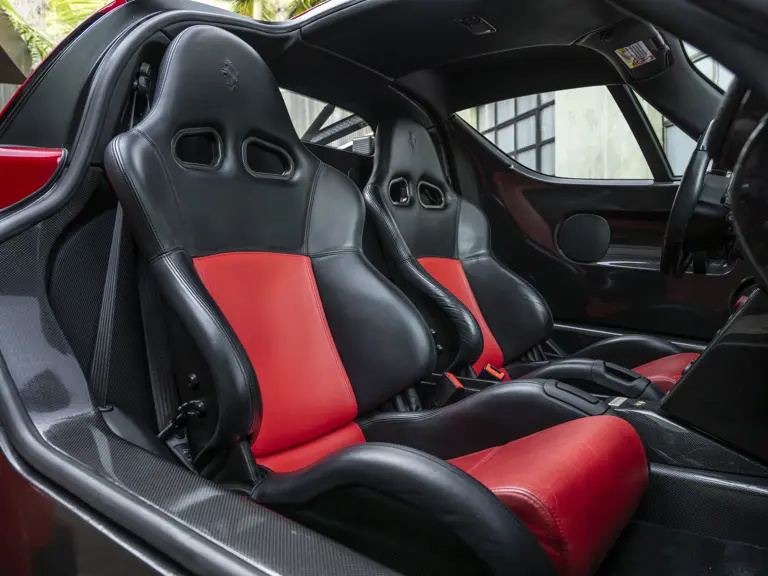
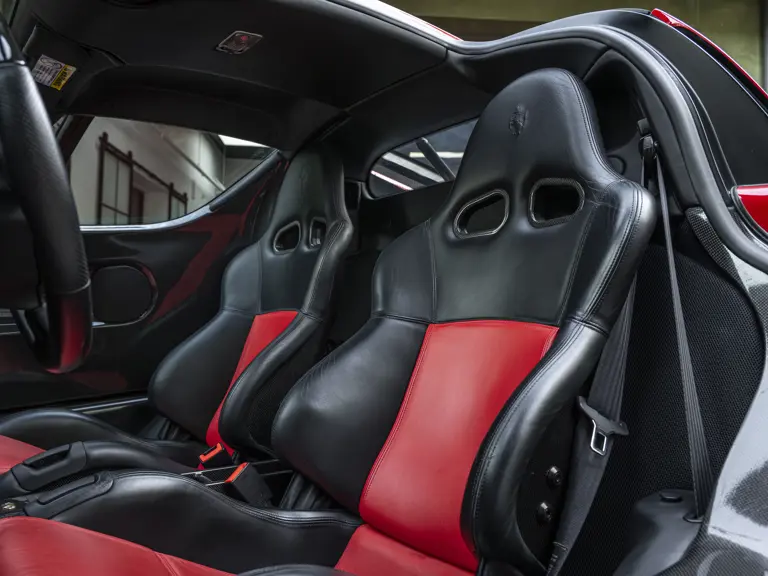
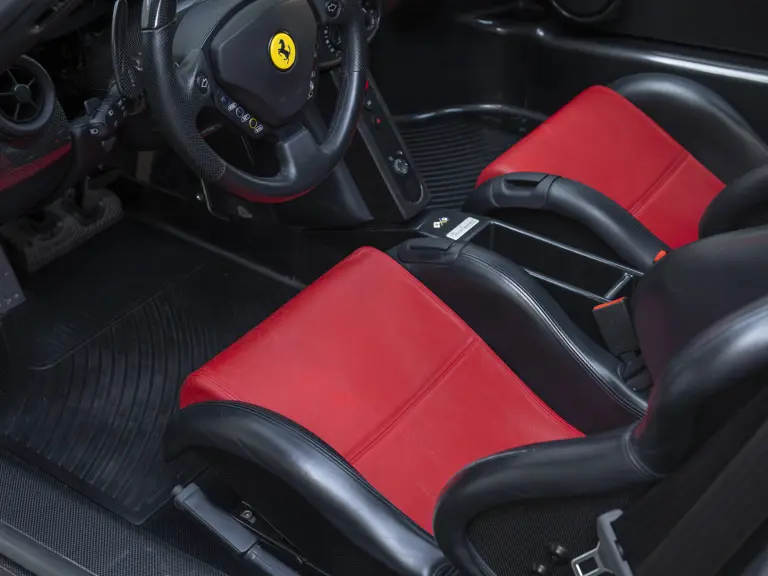
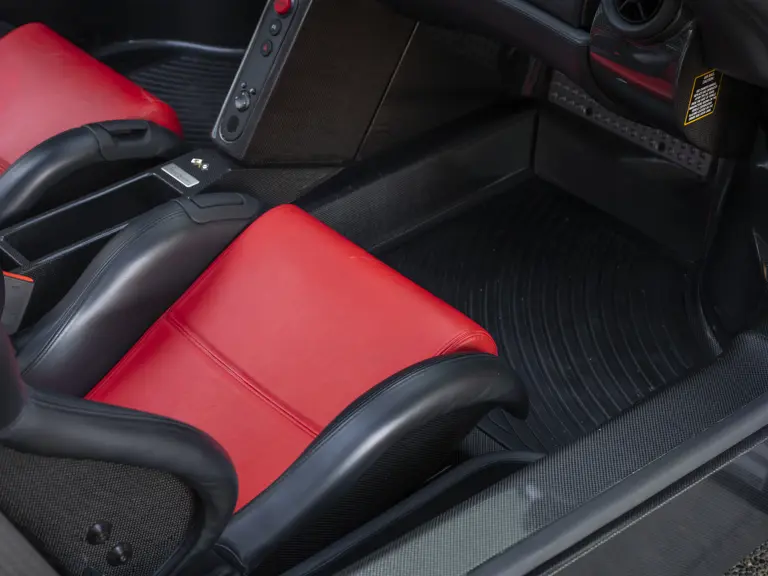
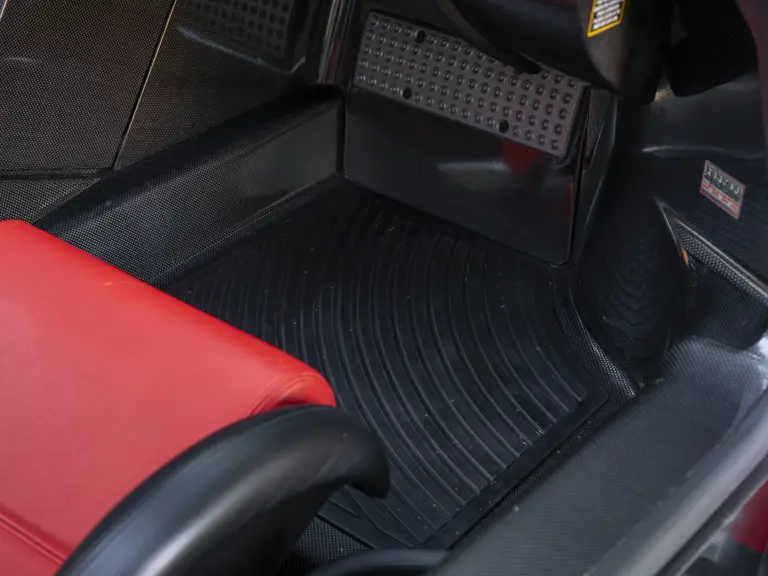
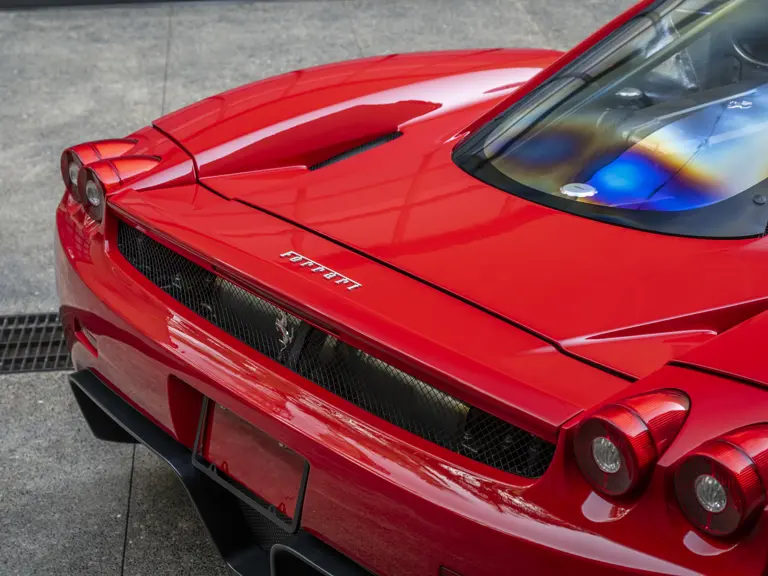
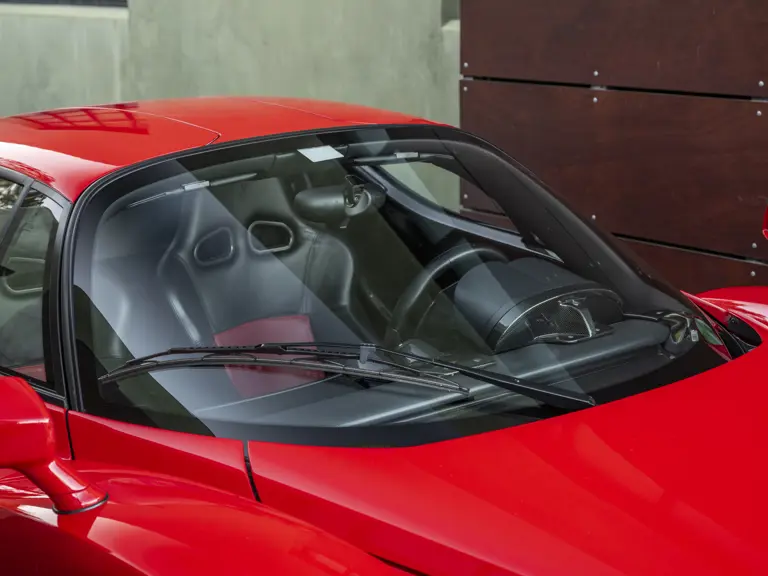
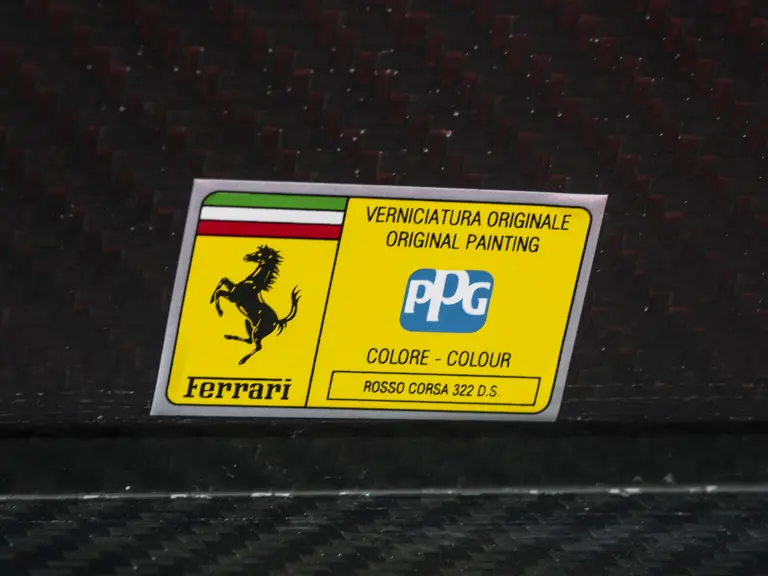
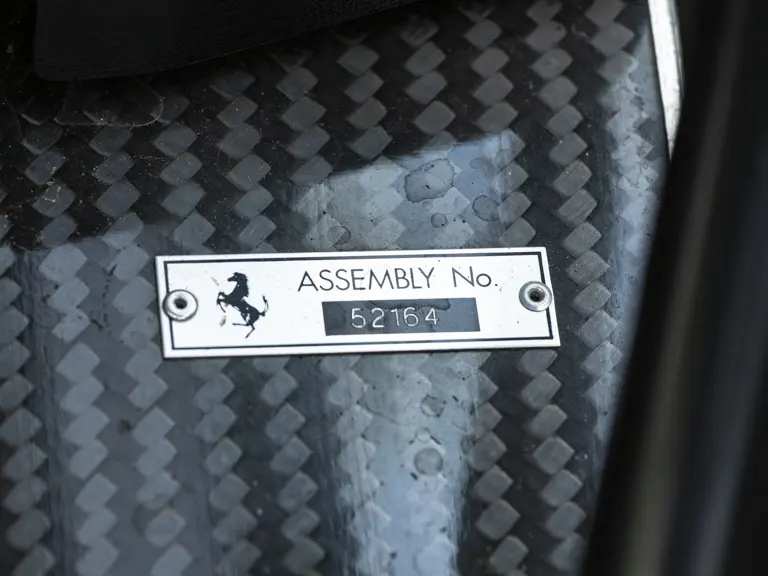
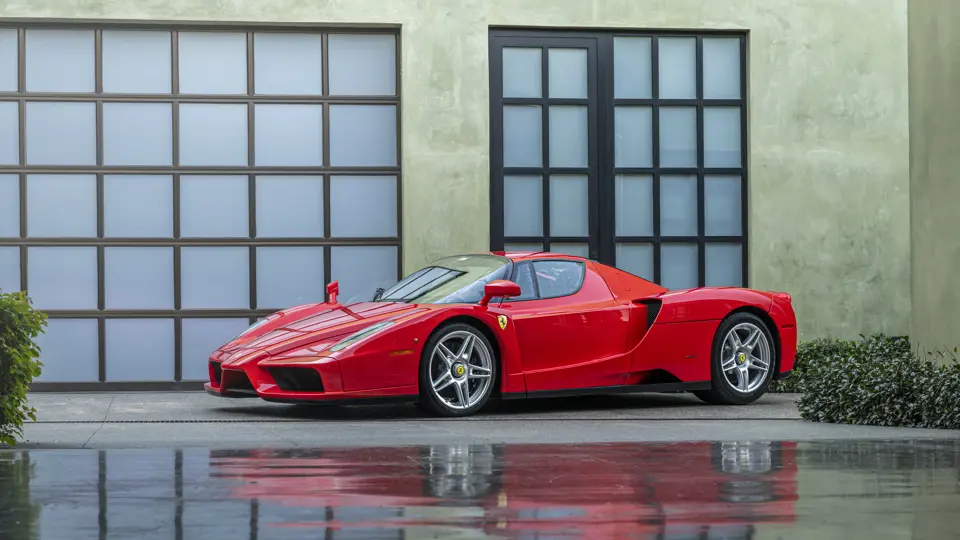
Approximately the 40th car built by chassis sequence, this enchanting early-production Enzo benefits from a life of minimal driving use and extended storage through only three documented owners, resulting in a charmingly preserved example. Chassis number 128797 completed production in October 2003, finished in Rosso Corsa over a Nero interior with Rosso seat inserts. Specified for the US market, the Enzo was delivered new to a collector in Florida who kept the car only briefly. It found more lasting ownership with the second caretaker, another enthusiast based in the Sunshine State.
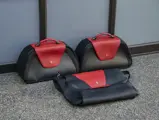
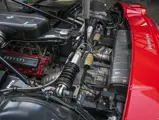
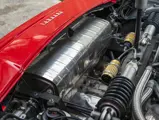
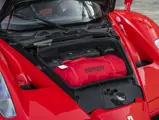
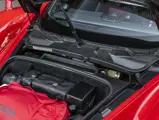
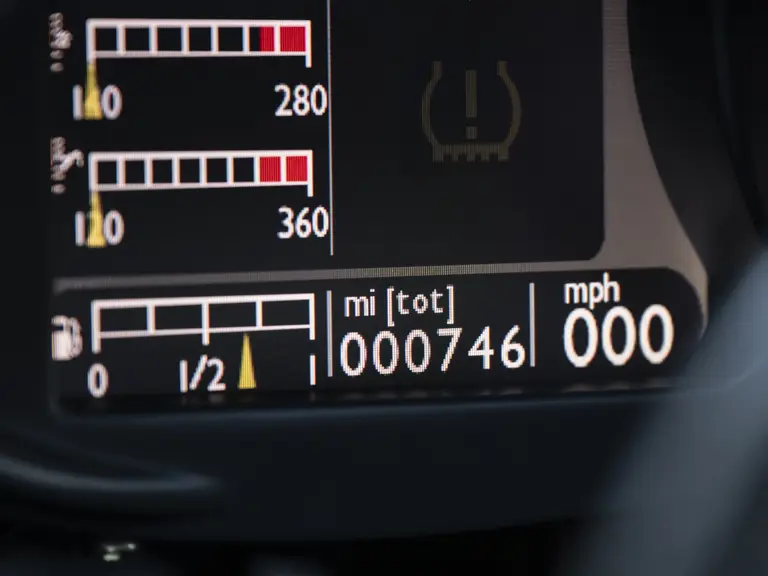
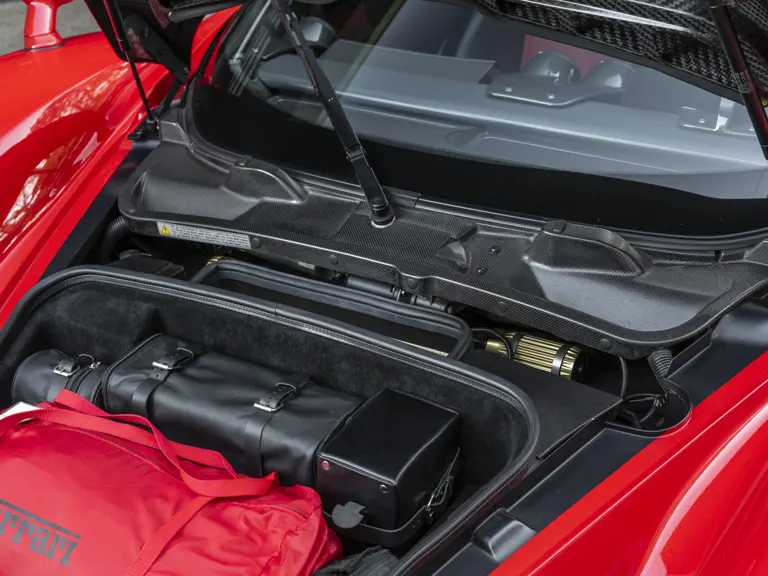
In January 2009, while displaying just 429 miles, the Ferrari was sold into a private collection in Texas. Since then the Enzo has only occasionally been driven while being secured in cloistered storage. In 2022 the Ferrari’s presentation was bolstered with the acquisition of an authentic three-piece Enzo luggage set, which accompanies the car today. In preparation for the current offering, 128797 was submitted to Ferrari of Newport Beach for a comprehensive service to recommission the car for complete roadworthiness after so many years of sparing use and long-term storage. No expense was spared to thoroughly rejuvenate the Enzo.
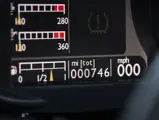
Currently displaying a remarkably low odometer reading of just 746 miles, this beautiful Enzo is surely one of the least-driven examples one might encounter, and it would strongly complement any collection of important Ferraris or modern hypercars. Chassis number 128797 beautifully exemplifies all the strengths of Ferrari’s benchmark millennial hypercar, featuring the brutal performance and take-no-prisoners styling for which the Enzo has become a legend. For collectors in search of a purely presented, low-mileage example, this car represents an unbeatable opportunity.

 | Phoenix, Arizona