
Chassis No.
VF9SA15BX6M795013
{{lr.item.text}}
{{bidding.lot.reserveStatusFormatted}}
Few cars ever define an entirely new category. The Bugatti Veyron is one of those rare instances—the first contemporary hypercar to combine lavish luxury with unprecedented speed.
It emerged in the late 1990s from the relentless efforts of Ferdinand Piëch, grandson of Ferdinand Porsche, who became chairman of Volkswagen Auto Group in 1993 after working his way up the ranks, contributing to such projects as the Porsche 906 racecar and Audi’s revolutionary turbocharging and all-wheel drive programs. Under Piëch’s direction, Volkswagen AG re-established Bugatti Automobiles S.A.S. in 1998 after acquiring the defunct French automaker’s naming rights. His grand vision of what a modern Bugatti should be famously included engineering targets that seemed impossible—most notably, engine output of 1,000 PS, or 986 horsepower. Money was no object, with the project harnessing every ounce of Volkswagen AG’s considerable capabilities. Simply put, this had to be the fastest, most powerful, most exclusive roadgoing production vehicle on the planet.
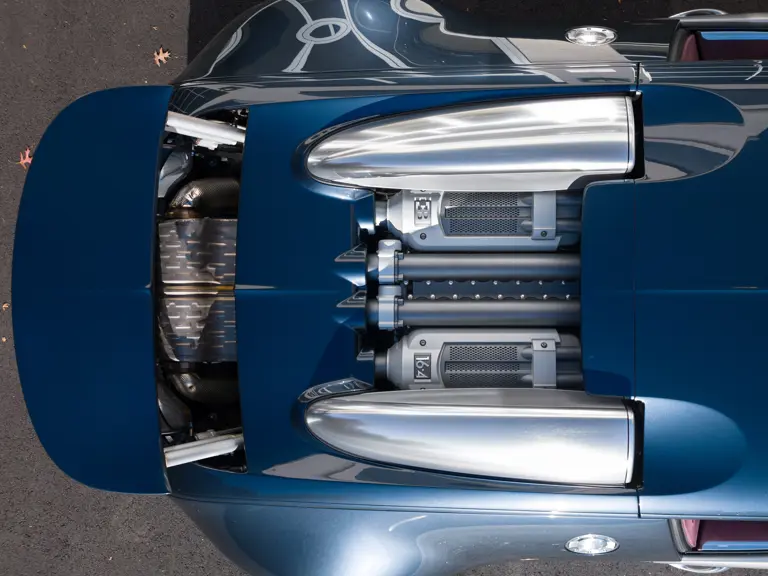
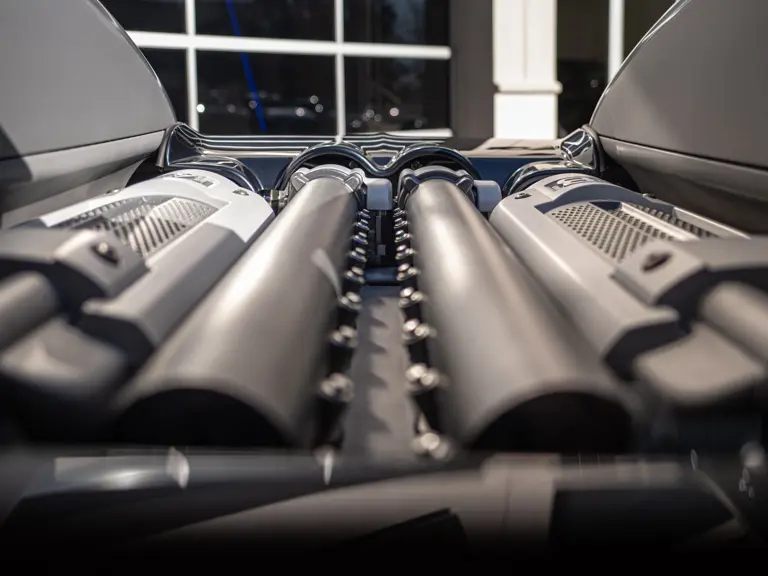
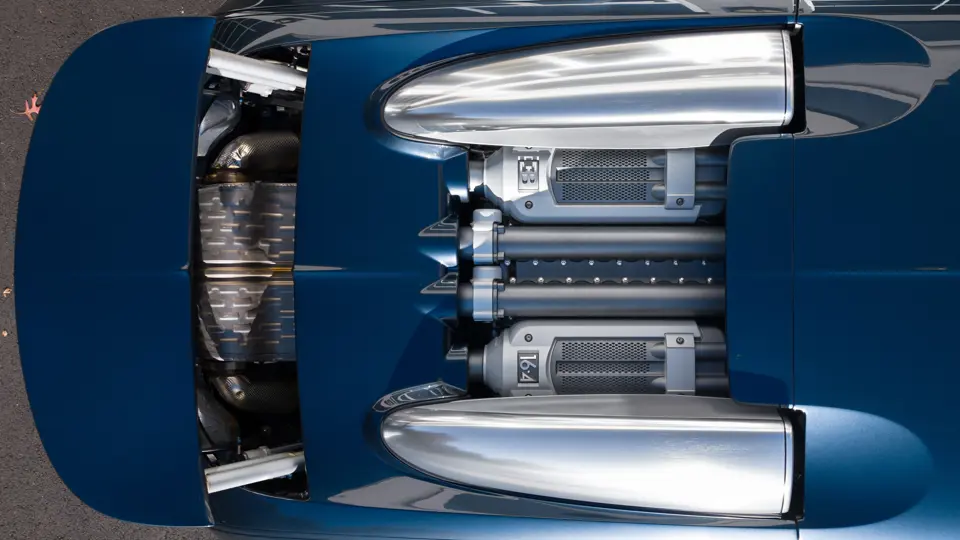
The result was staggering, with the 2005 Bugatti Veyron 16.4 achieving zero to 60 mph in 2.5 seconds and a mind-boggling top speed of 253 mph. This impressive amount of power and performance could only come from an equally astounding engine: Essentially two V-8s conjoined at the crankshaft, it displaced 8.0 liters across 16 cylinders in a W configuration, with four turbochargers—hence the 16.4 moniker. Dissipating the extreme levels of heat that came with producing nearly 1,000 horsepower in such a confined space required no less than 10 radiators throughout the compact, low-slung chassis—not to mention an open engine bay that put the impressive 16-cylinder on full display. A Haldex all-wheel-drive system and seven-speed, dual-clutch, direct-shift gearbox controlled the insane waves of power, making operation silky-smooth for everyday driving, befitting the lavish cabin.
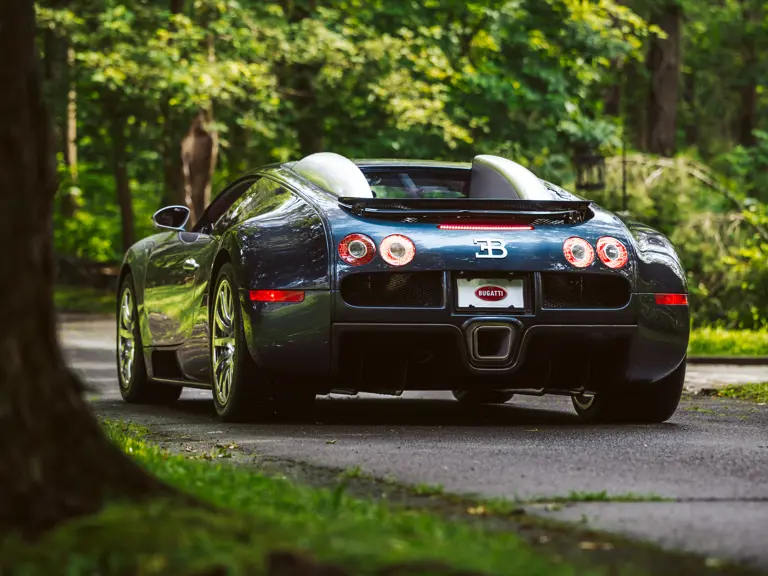
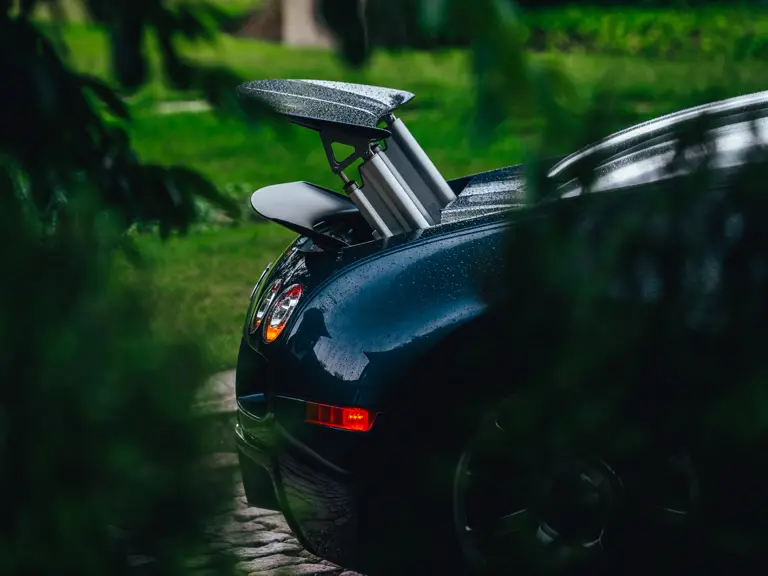
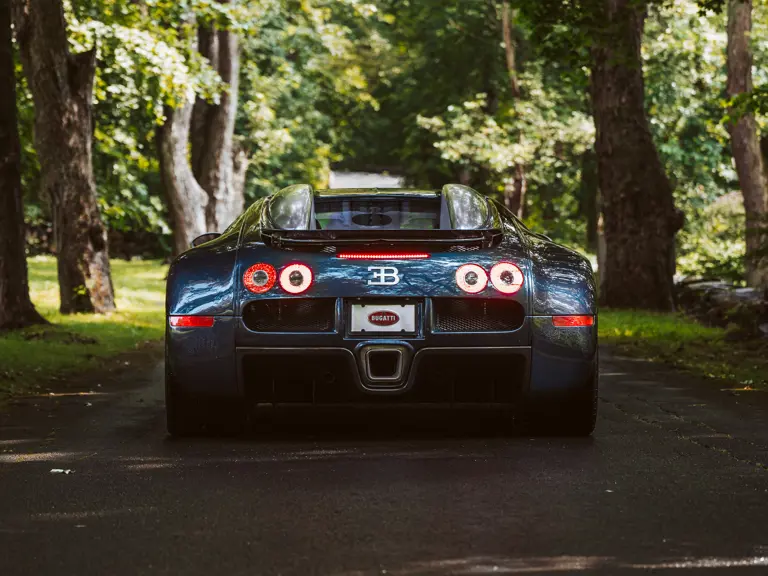
In standard mode, the Veyron’s top speed was limited to 213 mph. To hit 253 mph, the car would undergo an incredible transformation with a dedicated “speed key” inserted between the door sill and driver’s seat. This lowered ride height to just 2.6 inches, retracted the rear wing, and deactivated the front air diffusers. In this hyper state, the Veyron became much more aerodynamic, with a drag coefficient of just 0.36.
Achieving such speed in a road-legal car meant that every component had to be over-engineered. Massive cross-drilled, radially ventilated brake rotors were as large as some regular cars’ entire wheels and made of a carbon fiber reinforced silicon-carbide composite. They worked in conjunction with huge, aluminum, six-piston, monobloc calipers by AP Racing. Applying the brakes at speeds above 120 mph snapped the rear wing up and forward to create an air brake, generating a maximum deceleration force of 1.3 g on road-legal tires. Almost as impressive as the top speed itself, it only took 10 seconds for the Veyron to go from 250 mph to a complete standstill. In total, just 252 Veyron 16.4 coupes would see production, though other variants would follow, including an open-top version.
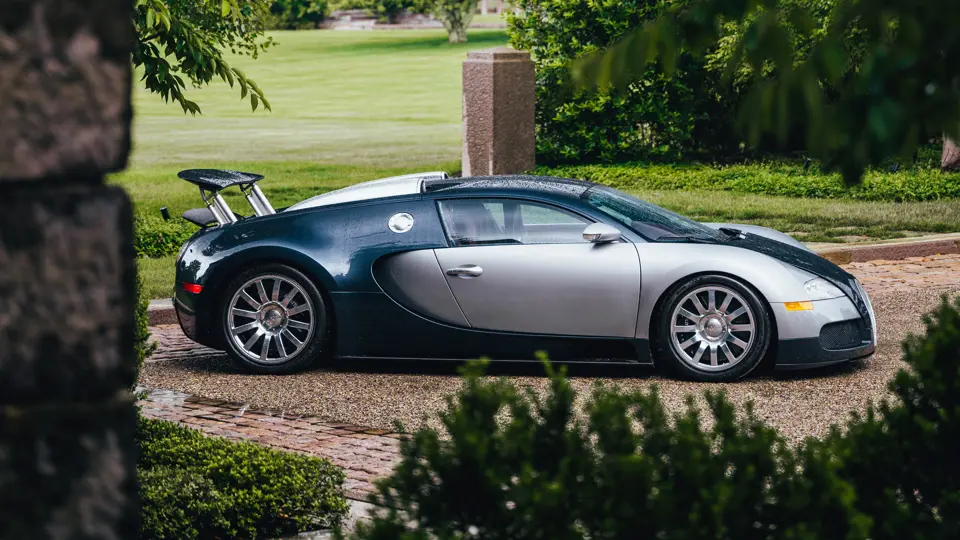
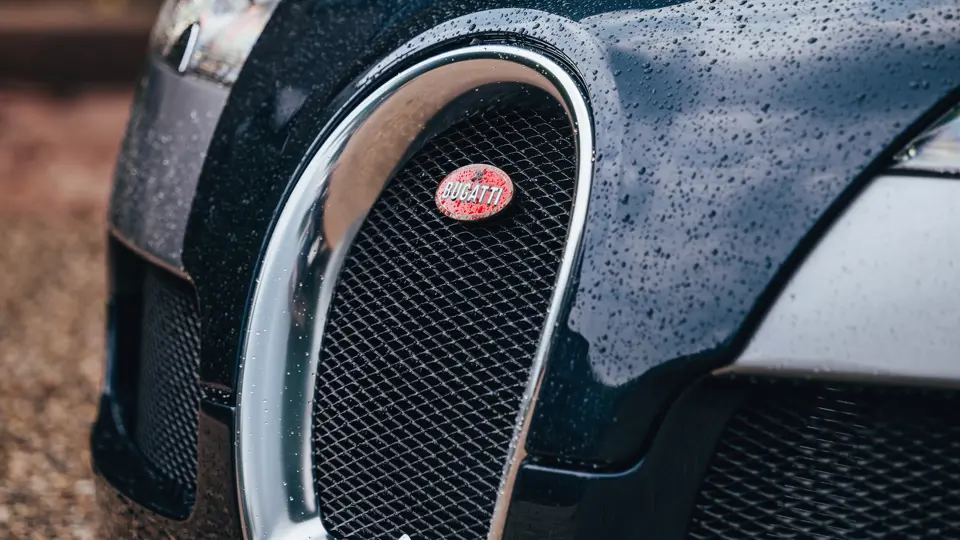
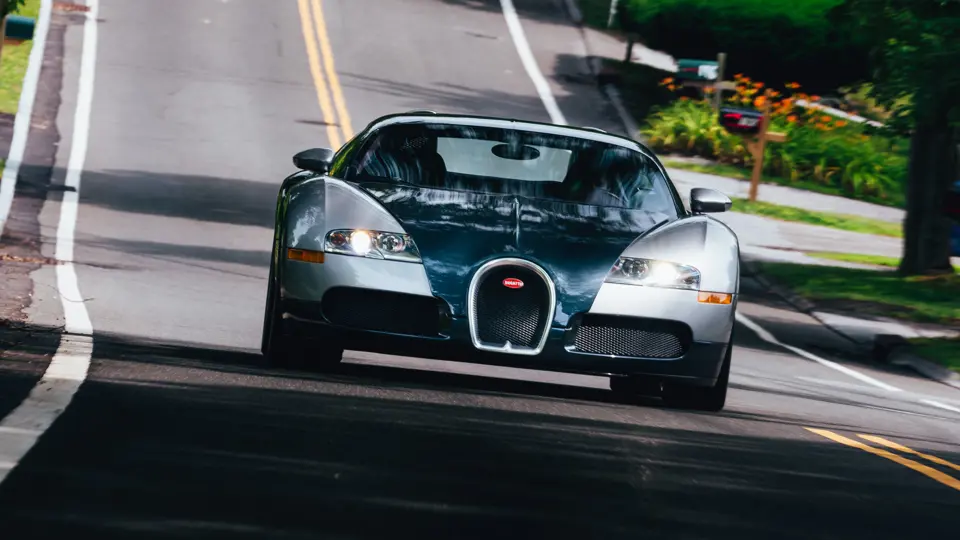
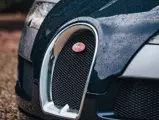
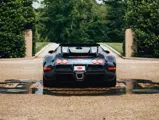
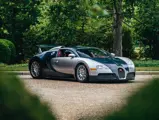
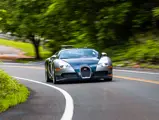
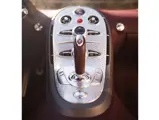
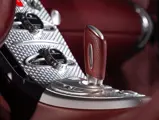
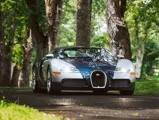
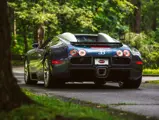
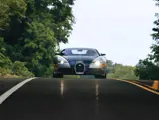
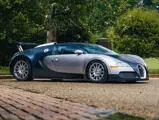
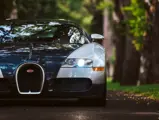
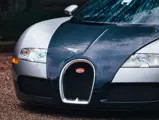
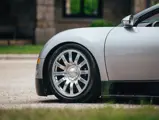
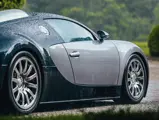
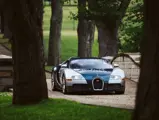
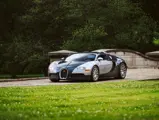
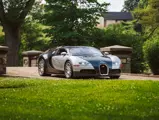
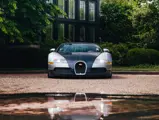
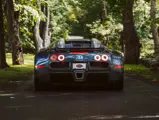
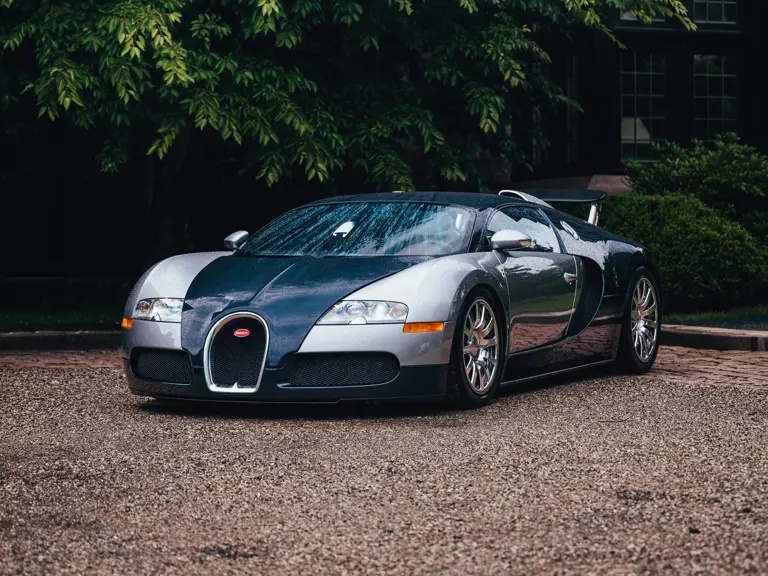
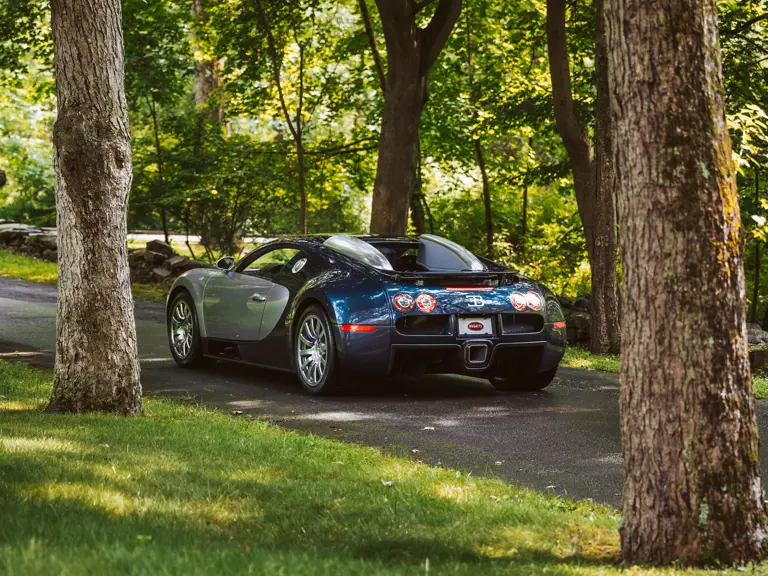
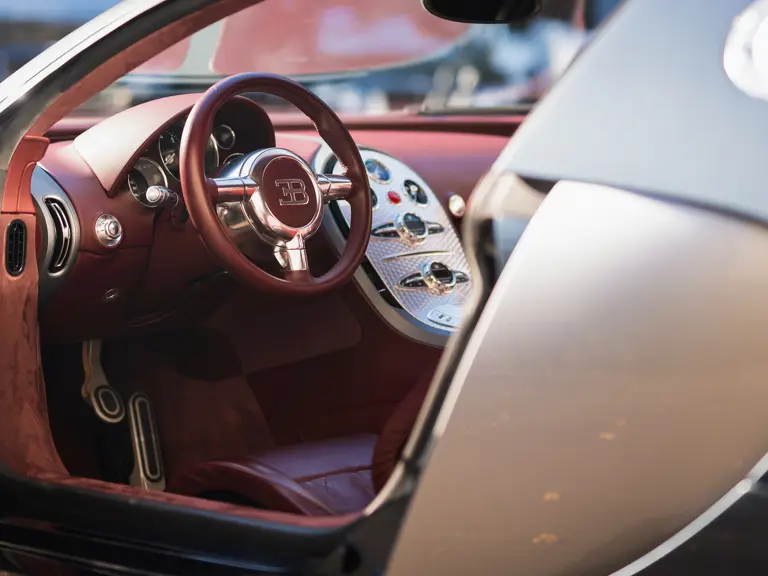
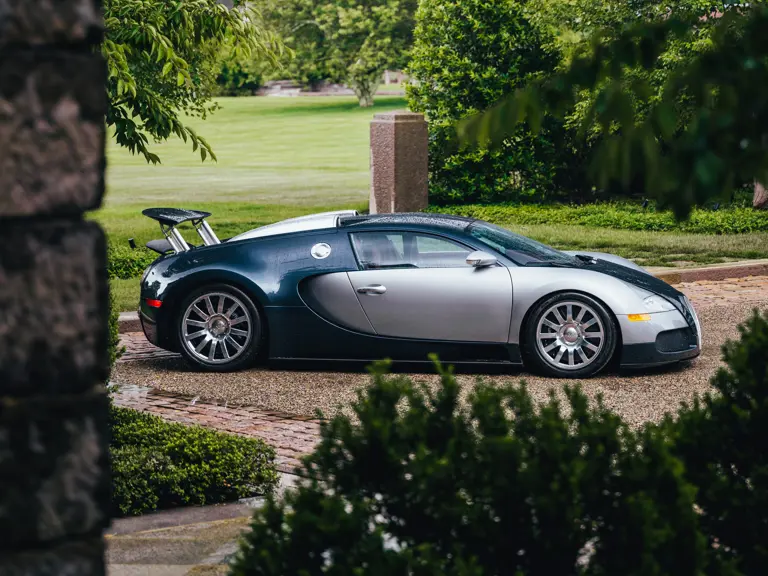
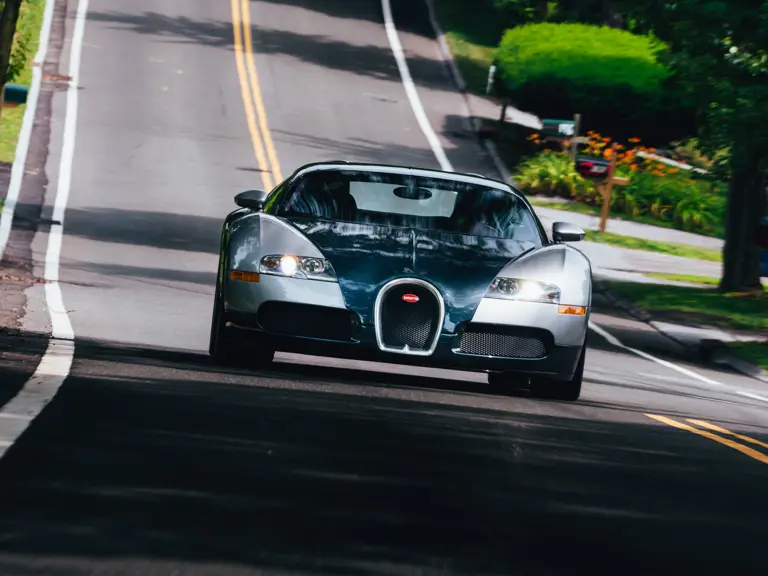
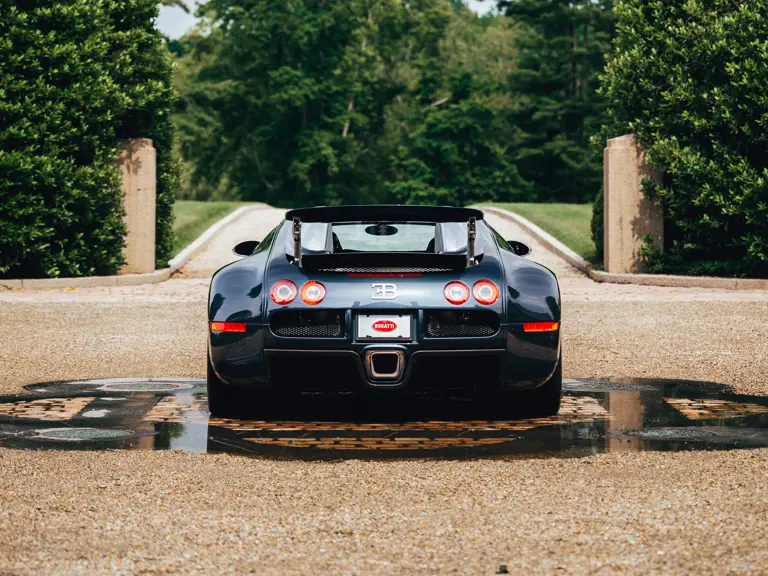
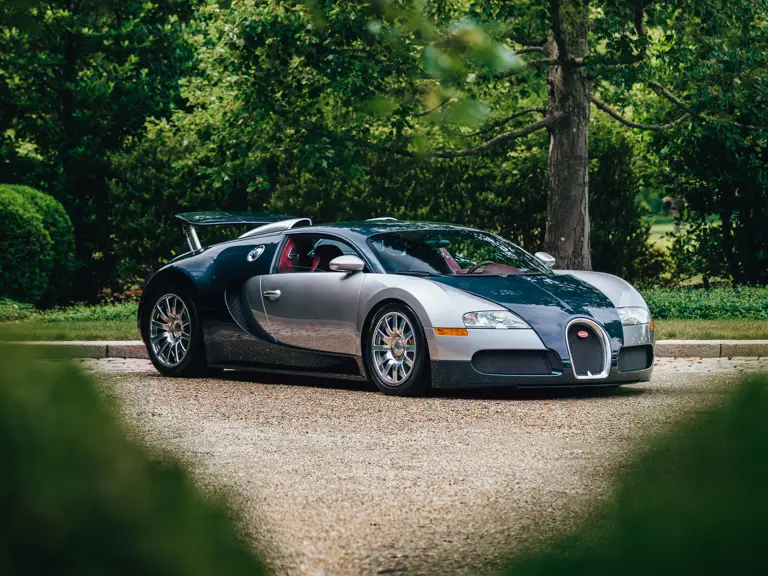
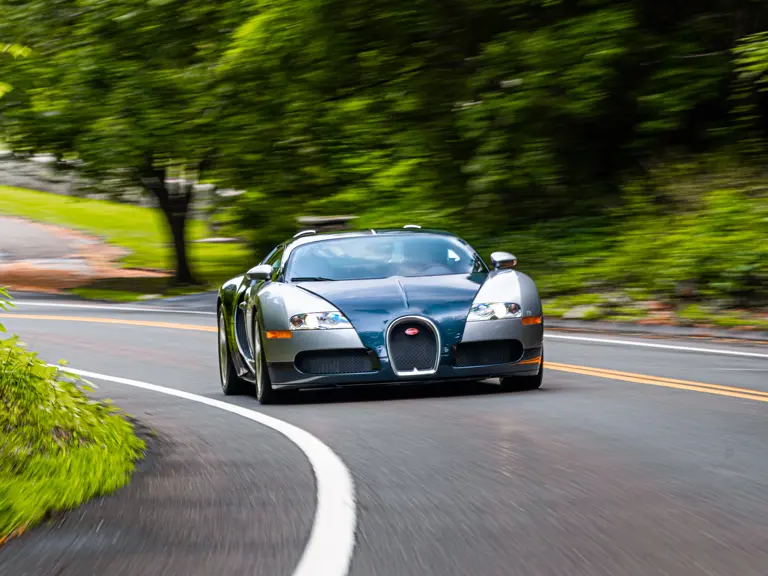
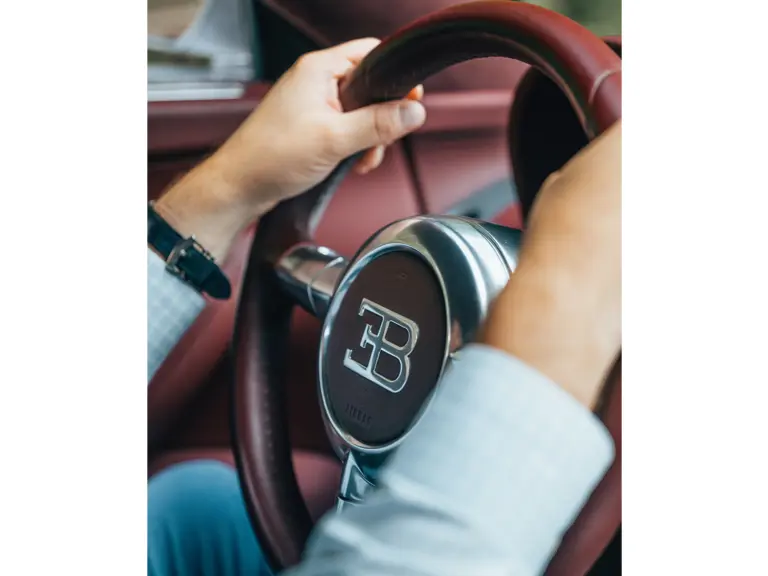
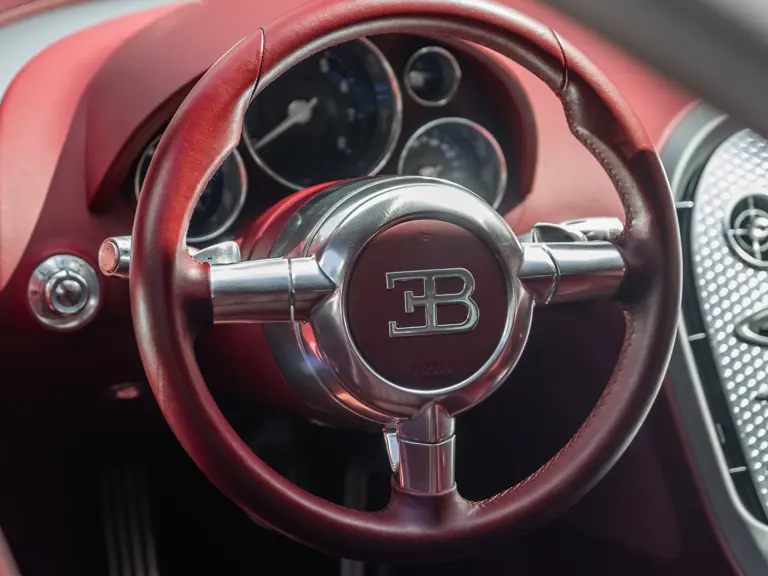
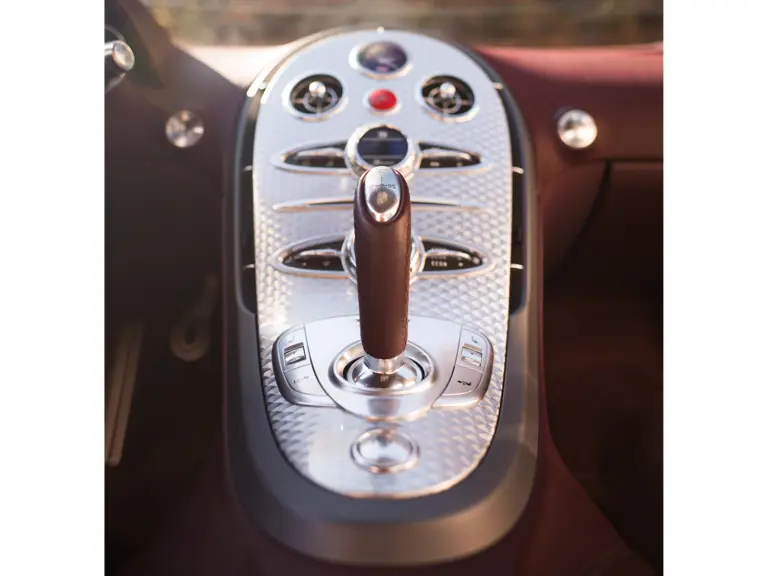
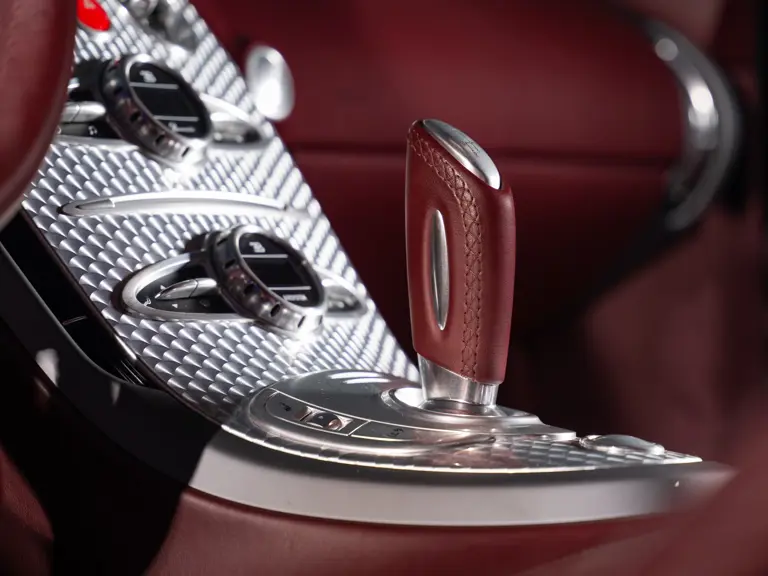
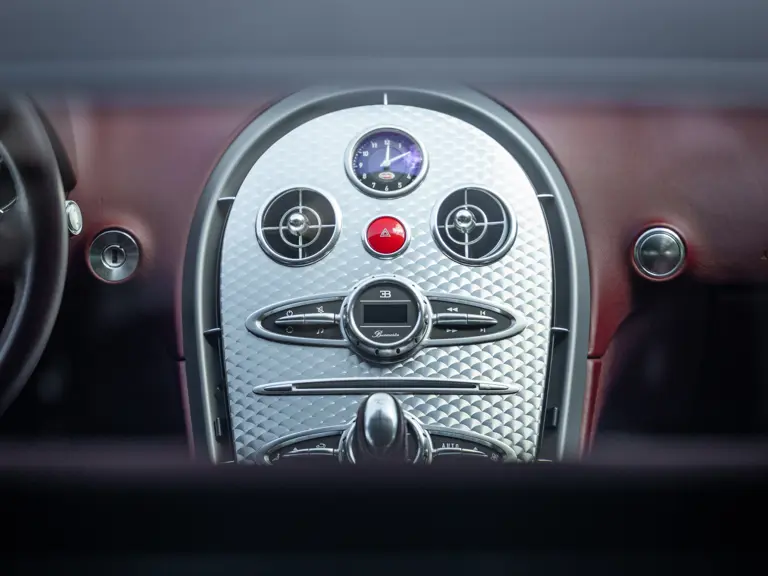
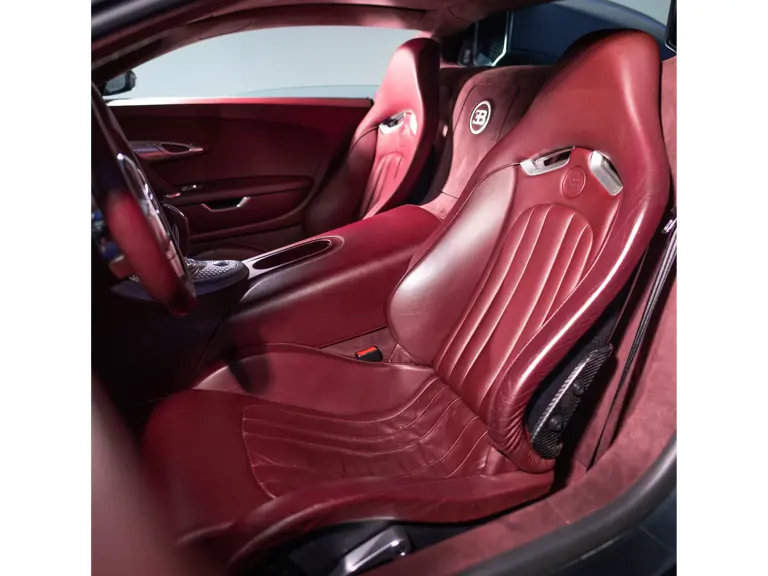
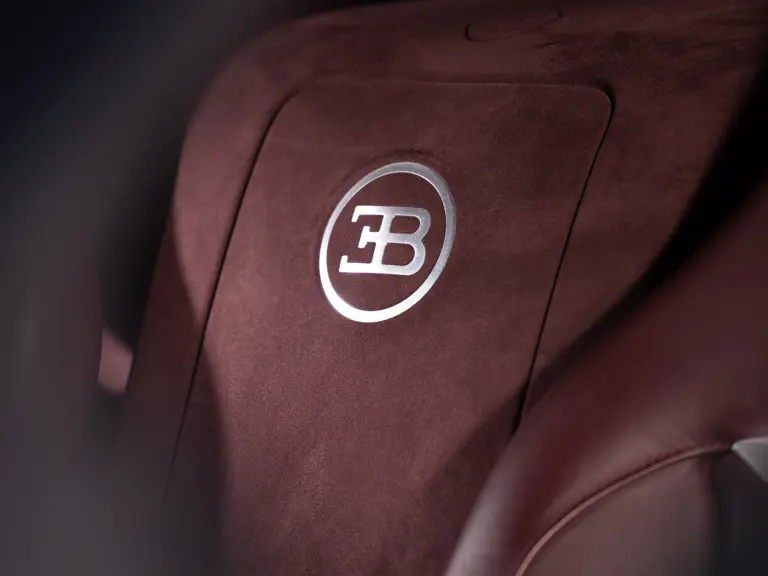
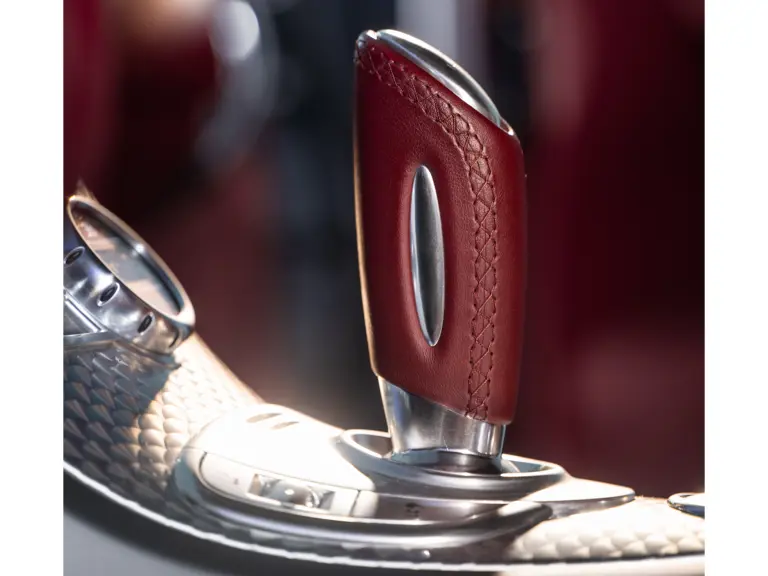
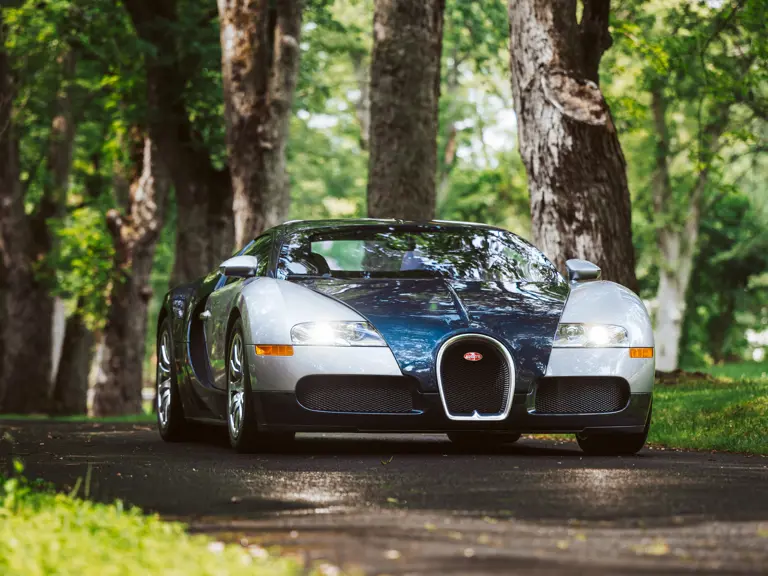
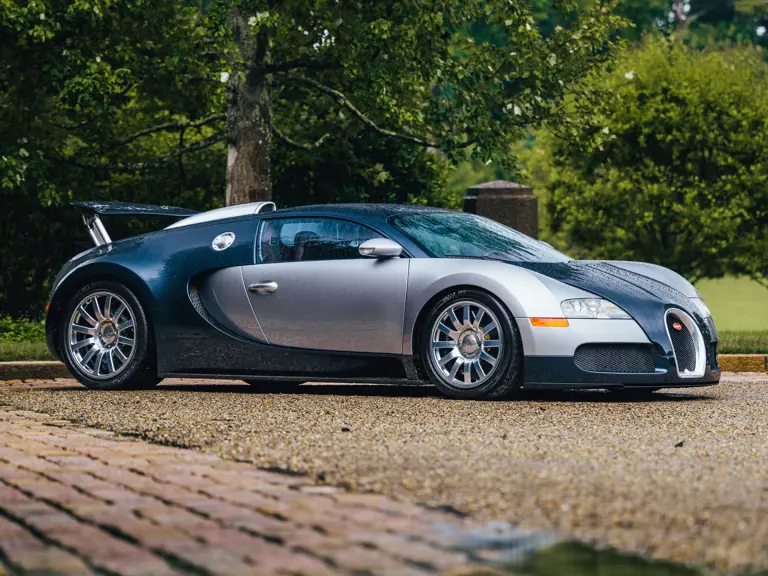
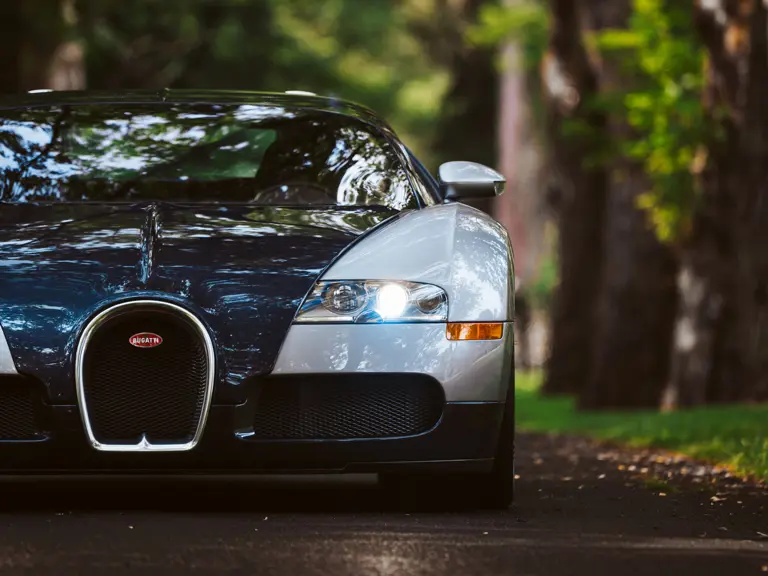
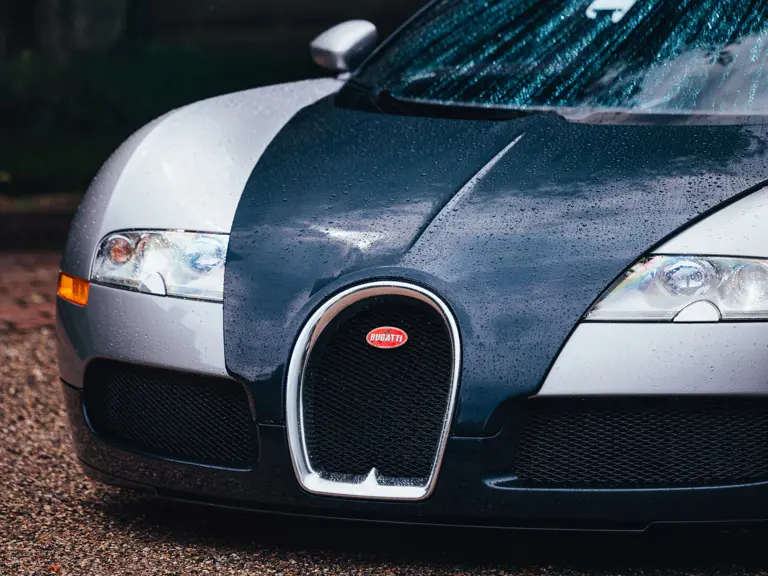
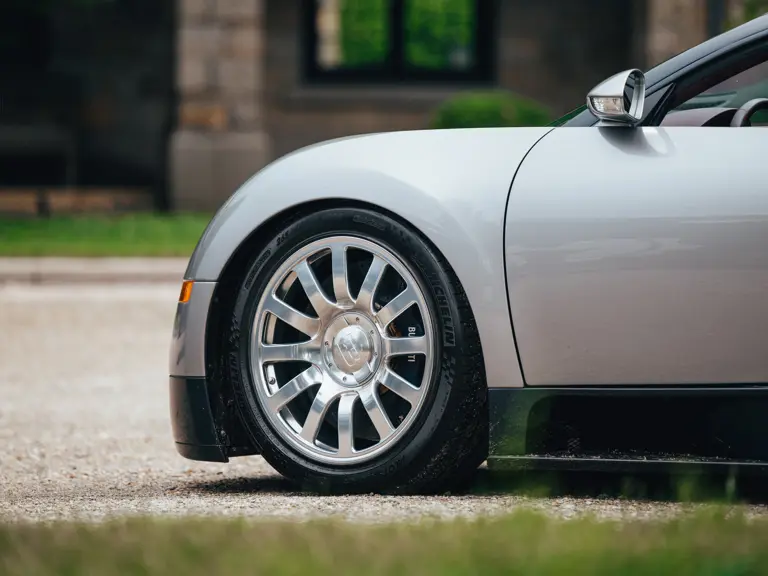
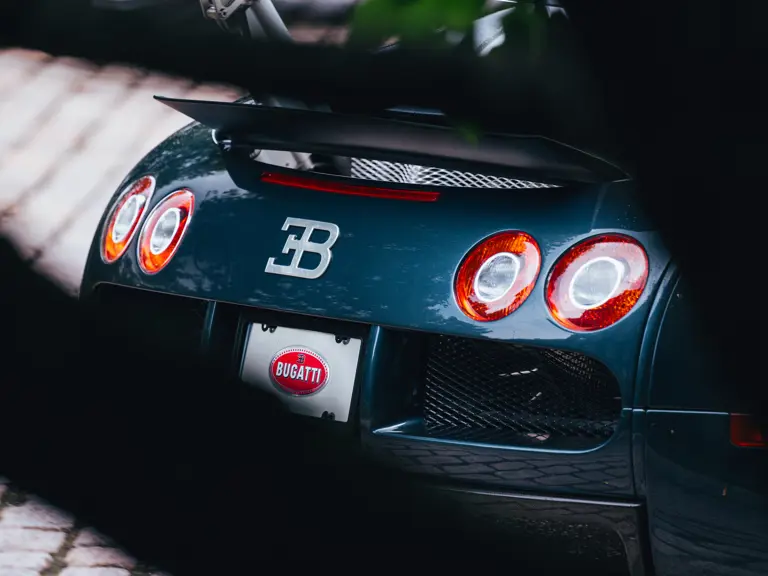
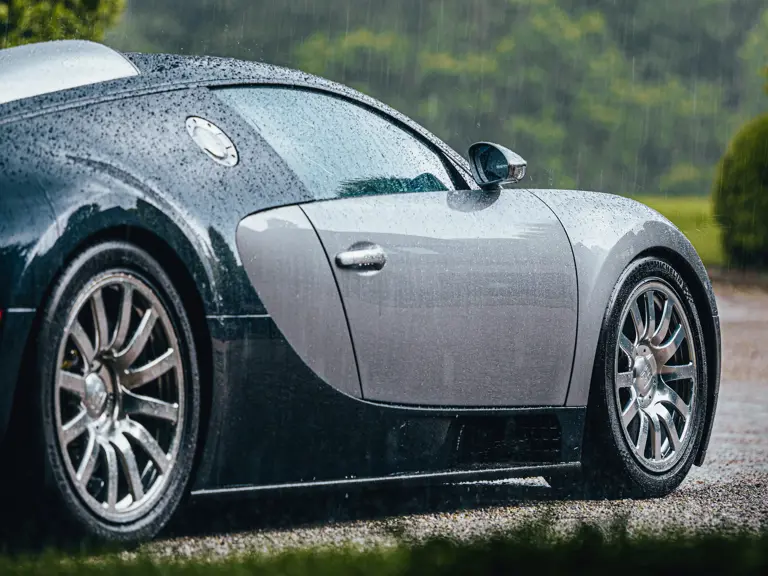
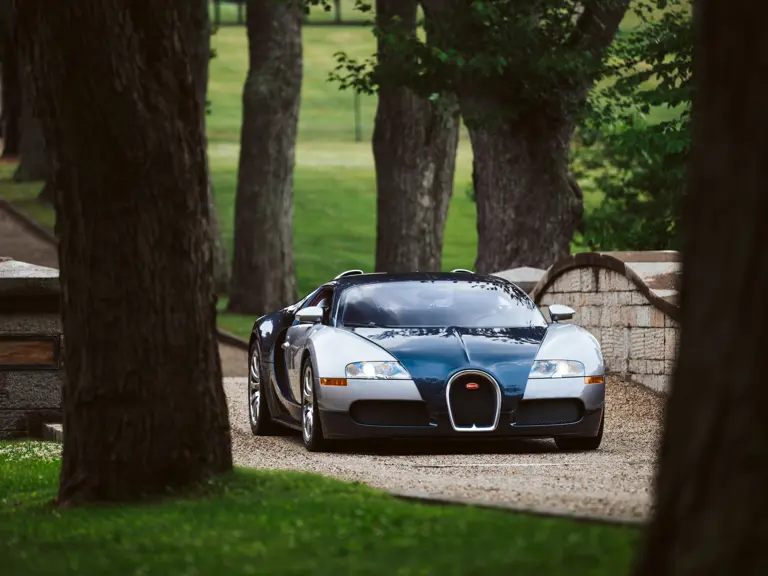
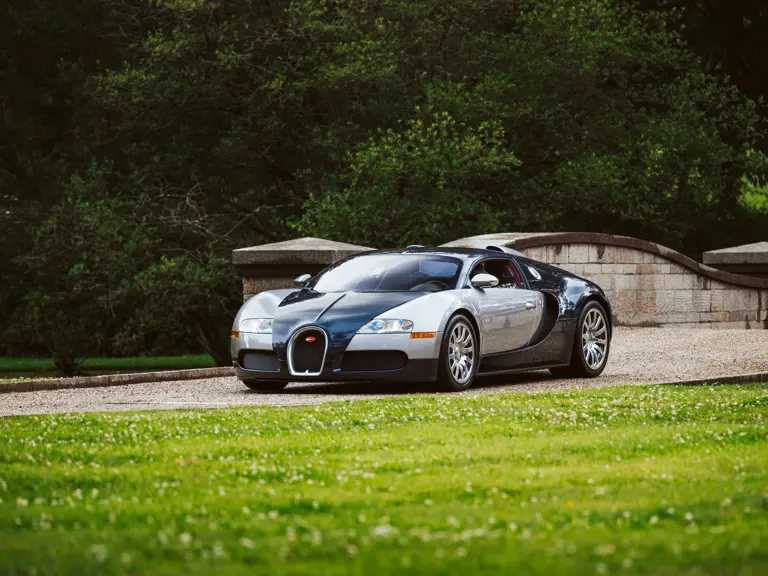
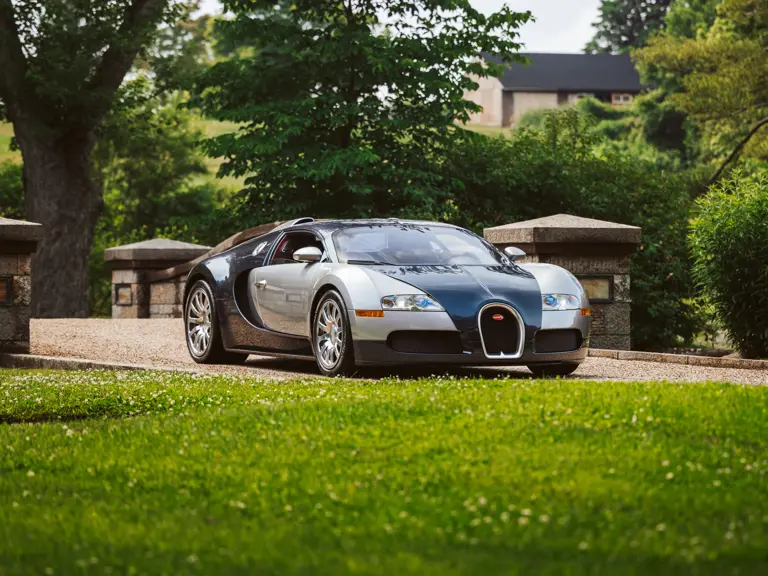
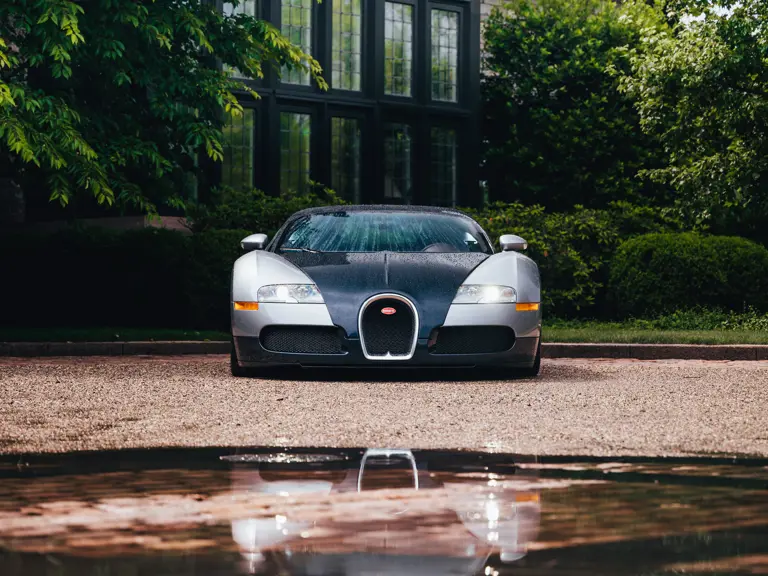
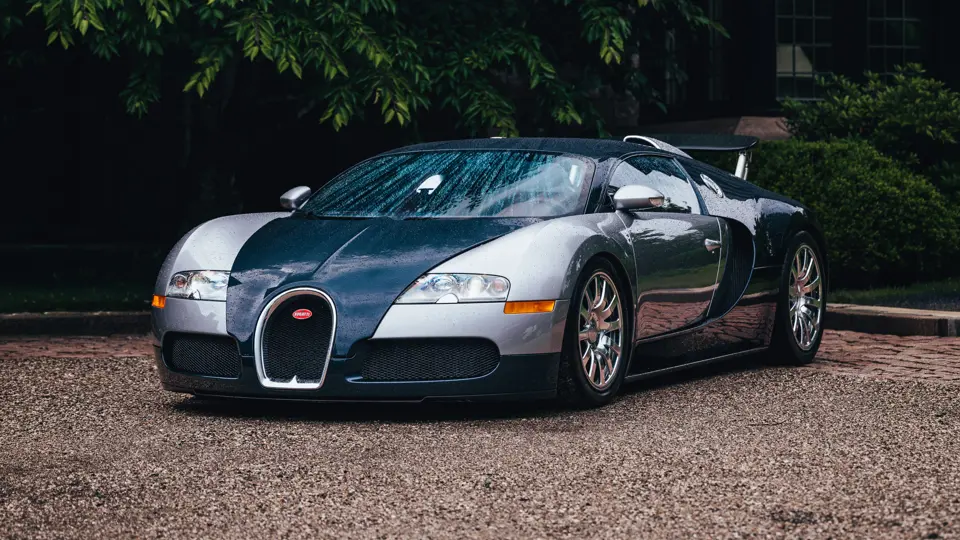
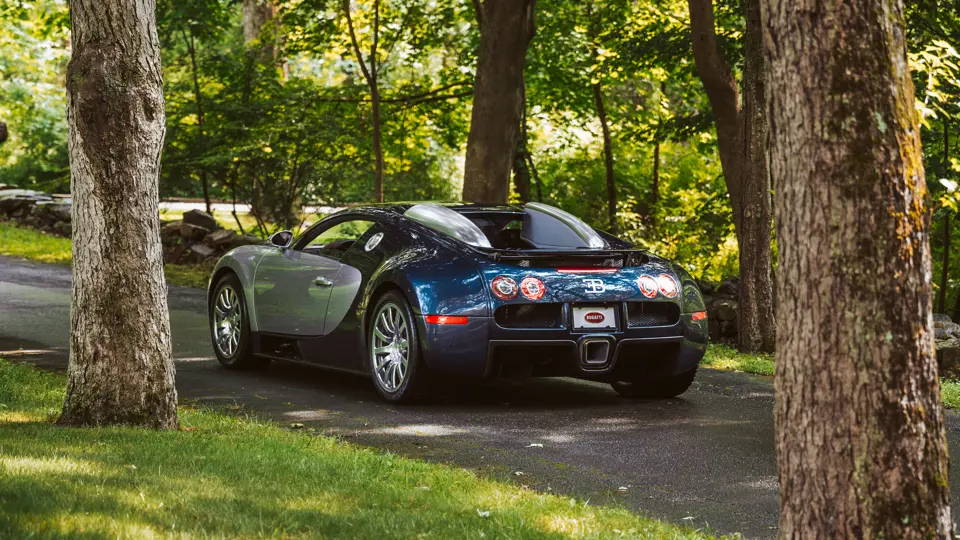
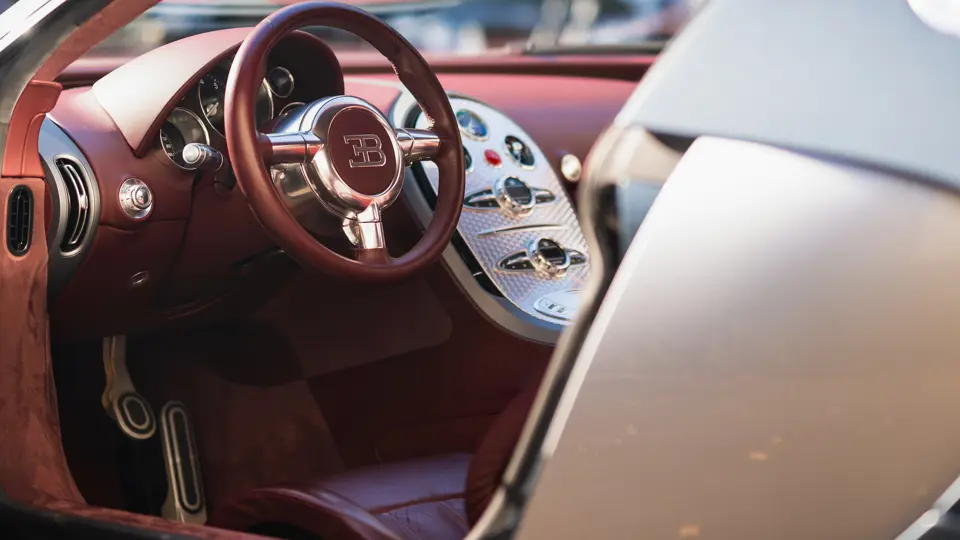
This Veyron 16.4, chassis number 013, was the second example built for the United States market and wears a Silver and Dark Blue Metallic two-tone color scheme that beautifully showcases the impactful yet restrained styling. The interior features sumptuous Grenadine leather and optional sport seats.
It was originally delivered to Florida and has been under present ownership since December 2023. Invoices on file dating back to 2009 document tens of thousands of dollars spent to maintain this spectacular machine. In September 2023, the car received an annual service and, in May 2022, four new tires.
Since its introduction more than 20 years ago, other manufacturers have been playing catch-up, trying to achieve the same combination of power, performance, and prestige. It was not until nearly a decade after its debut that other hypercars, including the LaFerrari, McLaren P1, and Porsche 918 Spyder, would surpass the Veyron 16.4’s astounding capabilities, albeit without quite matching its lofty luxury and clout. Truly a watershed for the automotive industry’s uppermost echelon, the Bugatti 16.4 will forever go down as the car that changed it all.
 | Miami, Florida